Sitcoms Online - Main Page / Message Boards - Main Page / News Blog / Photo Galleries / DVD Reviews / Buy TV Shows on DVD and Blu-ray

View Today's Active Threads (No Chit Chat/Chit Chat Only) / View New Posts (No Chit Chat/Chit Chat Only) / Mark All Boards Read / Chit Chat Board

View Latest Threads in 1980s Sitcoms / 1980s Sitcoms Photo Galleries


Sitcoms Online Message Boards - Forums  

Go Back   Sitcoms Online Message Boards - Forums > 1980s Sitcoms > 1980s Sitcoms - General Discussion
Register Community View Today's Active Threads (No CC/CC Only) Search Photo Galleries Calendar FAQ

Notices

SitcomsOnline.com News Blog Headlines Facebook X/Twitter Bluesky Threads Instagram YouTube RSS

Netflix's Monopoly Coming in 2027; Prime Video Carrie Series Premieres This Fall
The Hawk Premieres Thursday on Netflix; Snoopy Presents: There's No Place Like Home, Snoopy Trailer
Sitcom Stars on Talk Shows; This Week in Sitcoms (Week of July 13, 2026)
SitcomsOnline Digest: Rob Reiner Receives Posthumous Emmy Nomination; Season Premiere Date Set for American Horror Story
Great Entertainment Television Acquires House; Remembering Louise Lasser of Mary Hartman, Mary Hartman
78th Primetime Emmy Award Nominations; Disney's The Cheetah Girls: Next Gen
Ian Ziering Hosting The CW Road Trip Series; Shark Tank Season 18 Guest Sharks


New on DVD and Blu-ray

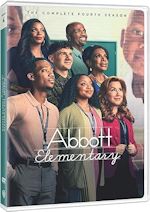
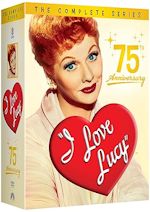
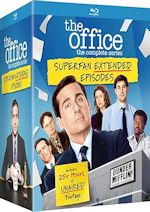
Happy's Place - Season One (Blu-ray) Two and a Half Men - The Complete Series (Blu-ray) Abbott Elementary - The Complete Fourth Season (DVD) I Love Lucy - The Complete Series - 75th Anniversary Edition (DVD) The Office - The Complete Series - Superfan Extended Episodes (Blu-ray)

11/04/25 - Happy's Place - Season One (Blu-ray) (DVD)
11/11/25 - Rick and Morty - Season 8 (Blu-ray) (DVD)
11/11/25 - SpongeBob SquarePants - The Complete Fifteenth Season (DVD)
11/11/25 - Two and a Half Men - The Complete Series (Blu-ray)
12/02/25 - Tom and Jerry - The Golden Era Anthology (1940-1958) (Blu-ray) (DVD)
12/16/25 - Lippy the Lion and Hardy Har Har - The Complete Series (Blu-ray)
12/16/25 - Wally Gator - The Complete Series (Blu-ray)
01/20/26 - The Woody Woodpecker and Friends Golden Age Collection (Blu-ray)
01/27/26 - The New Fred and Barney Show - The Complete Series (Blu-ray)
02/11/26 - Tom and Jerry - The Complete CinemaScope Collection (Blu-ray)
03/24/26 - Looney Tunes Collector's Vault - Volume 2 (Blu-ray)
04/11/26 - Abbott Elementary - The Complete Fourth Season (DVD)
04/21/26 - Famous Studios Champion Collection (Blu-ray) (DVD)
05/19/26 - I Love Lucy - The Complete Series - 75th Anniversary Edition (DVD)
05/19/26 - Looney Tunes Cartoons - The Complete Series (Blu-ray) (DVD)
07/14/26 - The Office - The Complete Series - Superfan Extended Episodes (Blu-ray)
07/28/26 - I Love Lucy - The Complete Series - 75th Anniversary Edition (Blu-ray)

More Recent and Upcoming TV DVD and Blu-ray Releases / TV Shows on DVD, Blu-ray and Prime Video / DVD Reviews Archive


Search Sitcoms Online:


Donate

Please make a donation if you can help with Sitcoms Online's web hosting costs. Thanks for your support!

We receive a small commission on all DVDs, Blu-rays, CDs, Books, and any other items ordered through our Amazon.com links as an associate. Thanks for using our links for your online shopping!

Reply
 
Thread Tools Search this Thread
Old 02-14-2022, 02:01 AM   #76
icecream
Cat-tastic and Whiskerlicious
Forum Celebrity
 
icecream's Avatar
 
Join Date: Sep 01, 2006
Location: The Catacombs
Posts: 20,824
Default

Quote:
Originally Posted by TVFactFan View Post
Bad Time for NEW SITCOMS, Sitcoms that was already on the air was still top 10
Cheers premiering in 1982 started out weak. But NBC's patience paid off and it became a smash hit, which launched smash hit spin-off Frasier.

Last edited by icecream; 09-05-2024 at 01:37 PM.
icecream is offline   Reply With Quote
Old 02-14-2022, 01:02 PM   #77
SarahBellum
Member
Forum 3000 Club Member
 
SarahBellum's Avatar
 
Join Date: Sep 15, 2007
Location: Cleveland, OH
Posts: 3,873
Default

Isn't that the time frame that shows like Real People and That's Incredible started to emerge? Maybe shows like that in addition to the prime time soaps had an adverse affect on new sitcoms.
SarahBellum is offline   Reply With Quote
Old 02-17-2022, 07:21 AM   #78
TMC
Member
Forum Idol
 
Join Date: Jan 09, 2001
Posts: 126,703
Default

SEVENTIES SITCOMS: 1977-1978. THE RAUNCH REVOLUTION AND THE FIRST SHARK JUMP

Quote:
The 1977 fall season could be considered "the beginning of the end" in regards to the quality sitcom programming of the era. But it depends on how one defines "quality." If you define it by a respect for the viewing public, you will bemoan the previous loss of the Mary Richards, the impending demise of "Bob Newhart Show," relish in the ratings resurgence of "Barney Miller," or feel redeemed by the resurrection of James L. Brooks into the three camera sitcom world the next season ("Taxi"), you may be lacking with a glimpse of hope for the future. If you define "quality" by prurient content, sappy resolutions, pandering catchphrases and audience-pleasing contrivances then you will be satiated by the immediate popularity of "Three's Company," the comfortable safety of Gary Marshall's 50's world, and the fading repetitive topicality in the Norman Lear universe and thusly witness the pinnacle of prime-time network comedy achievement. And then there's "Soap."

THE SILVERMAN SPOON
A history of seventies sitcoms is a history of Fred Silverman. As a programmer for daytime TV for CBS in the late sixties, Silverman championed the "superhero/mystery solver/breakfast cereal" tropes of Saturday morning kid's TV. After being promoted to programming chief in 1970, he proceeded to "cut down the trees," cancelling many old rural favorites and replacing them with sophisticated and daring urban fare. As we saw at the beginning of this blog series, that resulted in the MTM and Lear blockbusters. He also pioneered the concept of "spin-offs," creating even more ratings gold for CBS. For example, "Good Times" was a twice removed spin off of "All in the Family" and it knocked Marshall's sweet, nostalgic homage "Happy Days" off the ratings map in it's second season. So when he moved to ABC in 1975 (a move covered mightily by the press), not only did he bring "Scooby Doo" with him, he changed the dynamic (again) to focus on sensationalism, reliability and star power. It is unfair to focus on the "T and A" aspect of Silverman's strategy: he was responsible for the mini-series format--namely "Roots"--and for trying to launch a new vehicle for critical darling Nancy Walker. But when he made the bra-less Farrah Fawcett a worldwide poster child for, well, posters, he found his new strength: youth, excitement, and sex. And with a safely-neutered (figuratively speaking of course) street punk being highlighted along with a manic studio audience, "Happy Days" retook the Tuesday night crown from the pseudo-reality of ghetto life in "Good Times."

SHAKE AND AWE: THE NEW TWIN PEAKS OF ABC COMEDY.
By 1977, Silverman had cemented the Fonz, Laverne and Shirley and Vinnie Barbarino in pop culture iconography. In doing so, he wrapped up the family/youth market leaving only JJ and the Cooper girls for CBS's teen fandom. But in 1976, producer Aaron Spelling brought Fawcett and "Charlie's Angels" to ABC, altering the tastes of discerning viewers and pre-teen males (like myself). It wasn't good enough to be on the cover of TV Guide. The stars of the new programs must also grace the front of "Time," "Teen Beat," and "Playboy."

Don Nicholl, Bernie West and Michael Ross Americanized the saucy British sitcom "Man About the House" much as Norman Lear had done with "Til Death Do Us Part": "All in the Family" which the three writers had worked on previously to conceiving "Three's Company."

Unlike Lear's offerings, one will never find a dramatic moment or pregnant pause in the antics of Jack, Crissy and Janet. The "nervous breakdown" of the decade was taking hold: Vietnam and Watergate were fading from the headlines; civil rights studies were moving off the book shelves to make way for in-depth studies of the "me" generation and the resulting disco craze. And five years earlier, "Deep Throat" broke box-office records and ushered in the middle-class fascination for pornography. This new lifestyle phenomenon, part of the swinger culture, ushered in "porno chic." "Normal" citizens were now experimenting with mind-opening drugs, pot being the least controversial. Soon in 1978 "Debbie Does Dallas" would create more buzz for this new liberated art form. "Three's Company," with no nudity, no overt sex and no pulsing techno soundtrack gave audiences a safe outlet for their opening libidos and pharmaceutical experimentation through innuendo and Suzanne Somers' bouncing assets and tight shorts. Has anyone examined the subtle hints through the characters names? John Ritter as Jack "Tripper." Somers as Chrissy "Snow" (a missed opportunity for an excellent porn star name). Joyce Dewitt as Janet "Wood." And to make the show more relatable to the poor schlubs at home--after all, who gets to live in a swinging Santa Monica apartment complex during the era of free love?--the landlords, Mr. and Mrs. Roper (Norman Fell and Audra Lindlay) are a sexually frustrated wife with her "non-interested" husband. And in order for the extremely heterosexual Jack to co-habitate with sensible Janet and ditzy but hot Crissy, he has to convince the Ropers that he is gay. A modern parlour comedy. Allowing audiences to feel as they are watching "adult" material even though the sophistication and intellectual stimulation was, well, lacking.

I can remember the controversy this season when the "surging" ratings (sorry) allowed "Three's Company" to be paired with a new show that was being condemned by pretty much every special interest group, especially the Moral Majority. When a sitcom is criticized by both gays and Catholics you know you've reached the mother lode of satire. Writer Susan Harris ("All in the Family") teamed up with Tony Thomas and Paul Junger-Witt (her husband) to create "Soap." Although their previous collaboration, "Fay," was controversial in it's own right, it failed to capture any attention in 1975. But that wasn't the case with "Soap." The take-off on soap operas, what with the multiple story lines dealing with mostly sex and murder, outdid Lear's "Mary Hartman" in terms of public outrage and private outrageousness. And it was a hell of lot funnier. Actually, it was pretty much the funniest show on TV at the time. And that was it's saving grace. So after the "adult content" warnings (one of the few since "All in the Family" did it six years earlier) and the local ABC affiliate's relocation to the 9:30 (C) time-slot right before the nightly news (if not outright refusal to air) and the protests about inaccurate portrayals of homosexuality and offensive portraits of Catholic priests, the show settled into it's audience to become an extremely well-acted, well-written comedy appointment. All four seasons saw a continuing serial format with the announcer reviewing the previous week's events and commenting on next week: "What will happen to...?" "Well, find out on next week's episode of ..."Soap!"

A comedy goldmine: Two sisters--Jessica Tate (Katherine Hellmond) and Mary Campbell (Cathryn Damon). The Tates: philandering husband Chester (soap vet Robert Mandan), daughters Corinne (Diana Canova--offspring of Judy) and Eunice (Jennifer Salt--offspring of Waldo), son Billy (Jimmy Baio) and sardonic butler Benson (Robert Guillame). The Campbells: insane husband Bert (Richard Mulligan), mobbed-up son (Ted Wass), ventriloquist step-son with extremely sarcastic dummy (Jay Johnson) and, in his first major television role, Billy Crystal as gay son Jody.

Not shabby at all. Although the critics defined their opinions of the show by the level of shocks, it is only now that those who appreciate good comedy can see the high level of quality in the no-holds-barred writing and performances. Most of the time the laughs come from the characterizations and isolated situations rather than the topicality itself (unlike a lot of Lear's output). The show seems almost quaint now, but still funny. And allowing the drama--there was some--to blend with the laughs rather than jolt the audience into a moral position, "Soap" never took itself too seriously. And there was nary a bra-less jiggle in sight.

Speaking of Lear, this was the final "real" season of "All in the Family." Mike and Gloria would leave Archie and Edith at the end of the year in a powerful finale. The series would continue it's exploration of controversial themes (including the notorious episode where

Edith fends off a rapist on her fiftieth birthday) while showing signs of it's age with self-conscious directing (mostly by Paul Bogart) and less-crispy dialogue. Archie and Edith would continue a few more years and the series--with less direction from Lear and more from star Carroll O'Connor--would ramp up the pathos and sentimentality and ham-fisted acting and (gulp) even add a cute kid.
TMC is offline   Reply With Quote
Old 08-21-2024, 04:49 AM   #79
TMC
Member
Forum Idol
 
Join Date: Jan 09, 2001
Posts: 126,703
Default

Quote:
Originally Posted by TMC View Post
I've already posted articles around here in regards to the supposed "dark age" of sitcoms during the early '80s, but I'll post them again for those who haven't come across them yet:
The OTHER Diff'rent Strokes Curse

1980s sitcoms By Todd VanDerWerff | The A.V. Club
Quote:
Well, here's my theory. Sitcoms had gotten into a rut of playing it safe (or to use another word, cheap!). Not with the topics per se, but with the format they used. Really, go back to watch an episode of Silver Spoons and what do you see? It feels like someone is recording a stage play. The characters are pretty bland. The kids are cute and the parents just react to their antics with a smile and a wave of their head (this is one of the major things Bill Cosby threw out the window). Romances were very clean, major issues were discussed quietly, and all problems were resolved at the end with two (or more) characters talking out the issue and ending with a big hug or a laugh. Oh sure they tried to handle tough issues, but it falls flat when it's the same formula every episode. The formula was this:
  • Problem comes up
  • Problem is discussed
  • Problem is resolved
  • Resolution is discussed, show ends with a hug or a laugh. And of course, nothing that happens in the episode will in any way affect the next episode.

Next week focus on a different character then Lather, rinse, repeat.
Speaking of which, has anybody else noticed that on certain shows of this era like The Facts of Life, would more than often end episodes on a weird note, where there is a pause and then the audience was forced to clap, regardless of the intended seriousness of the episode?
TMC is offline   Reply With Quote
Old 08-21-2024, 05:33 PM   #80
Sal
Member
Forum Veteran
 
Sal's Avatar
 
Join Date: Jul 20, 2001
Location: Oakville, Ont. Canada
Posts: 6,195
Default

Quote:
Originally Posted by TMC View Post
Well, here's my theory. Sitcoms had gotten into a rut of playing it safe (or to use another word, cheap!). Not with the topics per se, but with the format they used. Really, go back to watch an episode of Silver Spoons and what do you see? It feels like someone is recording a stage play. The characters are pretty bland. The kids are cute and the parents just react to their antics with a smile and a wave of their head (this is one of the major things Bill Cosby threw out the window). Romances were very clean, major issues were discussed quietly, and all problems were resolved at the end with two (or more) characters talking out the issue and ending with a big hug or a laugh. Oh sure they tried to handle tough issues, but it falls flat when it's the same formula every episode. The formula was this:
Problem comes up
Problem is discussed
Problem is resolved
Resolution is discussed, show ends with a hug or a laugh. And of course, nothing that happens in the episode will in any way affect the next episode.

Next week focus on a different character then Lather, rinse, repeat

Thank you kindly for divulging the plot of every episode of "Full House". You simply had to spoil it for me. Now I feel very sad.
__________________
LIVE TV - Updated And Working By Request - July 2026

ANTENNA TV

CATCHY COMEDY

FE TV

ME TV

ME TV +

ME TV TOONS

PLUTO TV - Classic TV Comedy

PLUTO TV - Classic TV Families
Sal is online now   Reply With Quote
Old 09-05-2024, 07:21 AM   #81
BestTVever
Member
Senior Member
 
Join Date: Jan 29, 2021
Location: Miami
Posts: 1,923
Default

The early 80s had the major decline of CBS. CBS had the biggest sitcoms of All In The Family, Alice, The Waltons, etc. In the early 80s all those shows fizzled out. The early 80s was also right before NBC dominated the sitcom market of the mid to late 80s with Golden Girls, Cosby, etc.
1980 to 1983 was the transfer era from CBS to NBC
BestTVever is offline   Reply With Quote
Old 09-05-2024, 07:40 AM   #82
king of comedy
Member
Forum Veteran
 
Join Date: Aug 31, 2012
Location: New Jersey
Posts: 5,140
Default

Quote:
Originally Posted by BestTVever View Post
The early 80s had the major decline of CBS. CBS had the biggest sitcoms of All In The Family, Alice, The Waltons, etc. In the early 80s all those shows fizzled out. The early 80s was also right before NBC dominated the sitcom market of the mid to late 80s with Golden Girls, Cosby, etc.
1980 to 1983 was the transfer era from CBS to NBC
The Waltons was a drama.
king of comedy is offline   Reply With Quote
Old 09-05-2024, 08:50 AM   #83
Willbo
Member
Forum Regular
 
Join Date: Feb 10, 2012
Location: Chattanooga, TN
Posts: 863
Default

Quote:
Originally Posted by king of comedy View Post
The Waltons was a drama.
I guess you could count Corabeth and the Baldwin sisters as the comedy.
Willbo is offline   Reply With Quote
Old 09-05-2024, 11:48 AM   #84
Alan Brady's Hair
Member
Senior Member
 
Join Date: Aug 30, 2014
Posts: 1,831
Default

I think American sitcoms had their first death in the late 60s. New shows Batman, Get Smart, Hogan's Heroes are nominated for the comedy Emmy for 1965-66, and then the Monkees in 1966-67. Then you get new nominees that are barely detectable as comedies:


1967-68: Family Affair
1968-69: Julia, The Ghost and Mrs. Muir
1969-70: The Courtship of Eddie's Father, Room 222

Note that in this same period, long-running sitcoms My Three Sons, Andy Griffith Show, and Petticoat Junction have largely turned to dramedy.

There were two new true comedies nominated - The Bill Cosby Show and My World and Welcome to It, but they were both more whimsical than laugh-out-loud.

You do get the flowering of comedy again in the early 70s, but it wasn't really creative. Lear's big shows- AITF and Sanford and Son - were purchased from the UK, then Lear relentlessly spun off everything he could. Mary Tyler Moore Show is basically a reworking of The Dick van Dyke Show, and then Bob Newhart follows MTM.

The people who made the 70s sitcoms were mostly dinosaurs. Lear and Larry Gelbart had been writing variety shows since the 50s. Grant Tinker had been the ad rep on the Dick van Dyke Show. Garry Marshall and Jerry Belson wrote for DvD. Danny Arnold had worked on shows back to the Real McCoys.
Witt-Thomas was the successor to Danny Thomas Productions.

It seems there's a very long-term trend away from comedy toward what's essentially soap opera, and the 1970s sitcoms were just a temporary resurgence. It's how The Bear ends up with the best comedy Emmy.

Last edited by Alan Brady's Hair; 09-05-2024 at 11:46 PM.
Alan Brady's Hair is offline   Reply With Quote
Old 09-05-2024, 11:56 AM   #85
BestTVever
Member
Senior Member
 
Join Date: Jan 29, 2021
Location: Miami
Posts: 1,923
Default

Quote:
Originally Posted by king of comedy View Post
The Waltons was a drama.
True but the point I was making was CBS's 70's ride at the top was crashing and ABC had a short buzz before NBC was king again in these years the thread is about.
BestTVever is offline   Reply With Quote
Old 09-06-2024, 05:29 AM   #86
TMC
Member
Forum Idol
 
Join Date: Jan 09, 2001
Posts: 126,703
Default

Quote:
Originally Posted by badbrainsfan View Post
That is until Tom Hanks was popular. And Family Ties wasn't all that popular when Hanks was on there.
I do wonder if American sitcoms in the '80s were effected by outside forces going on in the real world, such as a certain shift in the zeitgeist (namely, the formation of Jerry Falwell's Moral Majority in 1979 and Coalition for Better Television in 1980 and the election of Ronald Reagan in 1981).

Basically, shows that dared to push boundaries and had any type of "edge" or controversial content like Three's Company, Soap, and Normal Lear's stuff such as The Jeffersons, Diff'rent Strokes, All in the Family/Archie Bunker's Place, etc. wouldn't fly anymore.

Also as stated in the link that I provided, Bosom Buddies, would be a bit of an anomaly, but then it would also be relatively short-lived (lasting only two seasons from 1980-1982).
TMC is offline   Reply With Quote
Old 09-07-2024, 06:08 AM   #87
TMC
Member
Forum Idol
 
Join Date: Jan 09, 2001
Posts: 126,703
Default

Quote:
Originally Posted by Alan Brady's Hair View Post
I think American sitcoms had their first death in the late 60s. New shows Batman, Get Smart, Hogan's Heroes are nominated for the comedy Emmy for 1965-66, and then the Monkees in 1966-67. Then you get new nominees that are barely detectable as comedies:


1967-68: Family Affair
1968-69: Julia, The Ghost and Mrs. Muir
1969-70: The Courtship of Eddie's Father, Room 222

Note that in this same period, long-running sitcoms My Three Sons, Andy Griffith Show, and Petticoat Junction have largely turned to dramedy.

There were two new true comedies nominated - The Bill Cosby Show and My World and Welcome to It, but they were both more whimsical than laugh-out-loud.

You do get the flowering of comedy again in the early 70s, but it wasn't really creative. Lear's big shows- AITF and Sanford and Son - were purchased from the UK, then Lear relentlessly spun off everything he could. Mary Tyler Moore Show is basically a reworking of The Dick van Dyke Show, and then Bob Newhart follows MTM.

The people who made the 70s sitcoms were mostly dinosaurs. Lear and Larry Gelbart had been writing variety shows since the 50s. Grant Tinker had been the ad rep on the Dick van Dyke Show. Garry Marshall and Jerry Belson wrote for DvD. Danny Arnold had worked on shows back to the Real McCoys.
Witt-Thomas was the successor to Danny Thomas Productions.

It seems there's a very long-term trend away from comedy toward what's essentially soap opera, and the 1970s sitcoms were just a temporary resurgence. It's how The Bear ends up with the best comedy Emmy.
I've been trying to read more into this online about the 1960s being a bad era or time for American TV sitcoms on its own. One theory that I found, pinpoints this as lasting from 1960-1971, when All in the Family debuted. It was from there, that people started seeing comedies that didn't feature the stale 1950s sentimentality of the atomic family.

I know that in the 1960s, there were a lot of high concept and fantasy sitcoms like Bewitched and I Dream of Jeannie or rural sitcoms like The Andy Griffith Show, The Beverly Hillbillies, Green Acres, and Petticoat Junction. The Dick Van Dyke Show was I suppose, considered something of an anomaly during this era.

There was also the "heart comedies" like My Three Sons, Family Affair, and The Courtship of Eddie’s Father. These type of sitcoms placed a lot of emphasis on the stories, life lessons, and warm, wholesome, sentimental moments. They weren't necessarily particularly funny (at least, not overtly) but they had likable leads and characters. The Brady Bunch was arguably, the last really big sitcom of this particular type.
TMC is offline   Reply With Quote
Old 09-12-2024, 07:25 PM   #88
TMC
Member
Forum Idol
 
Join Date: Jan 09, 2001
Posts: 126,703
Default

Quote:
Originally Posted by Alan Brady's Hair View Post
I think American sitcoms had their first death in the late 60s. New shows Batman, Get Smart, Hogan's Heroes are nominated for the comedy Emmy for 1965-66, and then the Monkees in 1966-67. Then you get new nominees that are barely detectable as comedies:


1967-68: Family Affair
1968-69: Julia, The Ghost and Mrs. Muir
1969-70: The Courtship of Eddie's Father, Room 222

Note that in this same period, long-running sitcoms My Three Sons, Andy Griffith Show, and Petticoat Junction have largely turned to dramedy.

There were two new true comedies nominated - The Bill Cosby Show and My World and Welcome to It, but they were both more whimsical than laugh-out-loud.

You do get the flowering of comedy again in the early 70s, but it wasn't really creative. Lear's big shows- AITF and Sanford and Son - were purchased from the UK, then Lear relentlessly spun off everything he could. Mary Tyler Moore Show is basically a reworking of The Dick van Dyke Show, and then Bob Newhart follows MTM.

The people who made the 70s sitcoms were mostly dinosaurs. Lear and Larry Gelbart had been writing variety shows since the 50s. Grant Tinker had been the ad rep on the Dick van Dyke Show. Garry Marshall and Jerry Belson wrote for DvD. Danny Arnold had worked on shows back to the Real McCoys.
Witt-Thomas was the successor to Danny Thomas Productions.

It seems there's a very long-term trend away from comedy toward what's essentially soap opera, and the 1970s sitcoms were just a temporary resurgence. It's how The Bear ends up with the best comedy Emmy.
https://www.youtube.com/watch?v=VGr8-0AeGpw

Quote:
Category fraud has become a big topic of conversation around award shows nowadays (aka, "Wait, how is The Bear a comedy?!") Awards season is a great time to look back at all of our favorite films, shows, and performances of the last year – but every time the Emmy Awards in particular roll around and nominations are announced, there’s so much confusion about the seemingly random categories that some shows and actors are slotted into. So… what’s really going on here? Let’s take a closer look at the full Emmy process and the awards culture that drives it to figure out what’s really behind ‘category fraud’ and if there’s anything that can be done to fix it!

CHAPTERS
  • 00:00 Intro
  • 00:32 Why they want to win so bad
  • 02:13 Acting category fraud
  • 03:35 Surprising reasons for some acting category fraud
  • 04:30 When it's not really category fraud
  • 04:58 Show category fraud
  • 05:27 The 2015 show forced the Emmys to change (kind of)
  • 05:58 The categories haven't kept up with evolving tv
  • 07:18 The only real problem with the Dramedy takeover
  • 07:54 Finally moving in the right direction?
  • 08:45 Can awards shows save themselves?
TMC is offline   Reply With Quote
Old 09-26-2024, 04:47 AM   #89
TMC
Member
Forum Idol
 
Join Date: Jan 09, 2001
Posts: 126,703
Default

Quote:
Originally Posted by Dean Winchester View Post
I don't really think so, it's just regarded as a bad time because prime-time soaps ruled the era and the ABC shows from the late 70's were starting to go down and yet Bill Cosby hadn't premiered yet so sitcoms were in a decline during those years compared to the Happy Days/Laverne And Shirley domination.

But still, give me a handful of shows from this period over any current sitcom.
I just read something in the WKRP in Cincinnati forums that argued over whether or not it was truly the last great sitcom (you can also lump Taxi in there, which also debuted in 1978 and concluded a year after WKRP did) of the 1970s "golden age". After this, a whole lot of sitcoms came and went, and none of which had strong characters or ensembles.

Quote:
The last great sitcom from the Golden Era of the 1970s was another MTM production- WKRP In Cincinnati. Like the other classic shows from that stable, in many ways, WKRP was a classic sitcom. It did not push boundaries the way the Norman Lear sitcoms did, but it was not as lightweight as most of the Garry Marshall sitcoms. The show was created by Hugh Wilson, a former radio executive, and based on his experiences working in advertising as a client of a classic album-oriented rock radio station. The cast consisted included Gary Sandy as the station manager Andy Travis, Howard Hesseman as DJ Dr. Johnny Fever, Gordon Jump as station manager Mr. Carlson, Loni Anderson as his intelligent bimbo secretary Jennifer, Tim Reid as DJ Venus Flytrap, Jan Smithers as Bailey, Richard Sanders as newsman Les Nessman, and Frank Bonner as salesman Herb Tarleck. While a good ensemble, the show’s four funniest characters were Fever- a drug user, Mr. Carlson- a Mama’s Boy, the nerdy Les, and the lecherous Herb, who always lusted for Jennifer.

Many episodes centered around the dumb things Carlson, Les, and Herb did, or the wacked out adventures of Fever. Next to the Chuckles the Clown death episode on The Mary Tyler Moore Show, perhaps the most fondly remembered sitcom episode of all time is the Thanksgiving episode of WKRP. The show revolves around Mr. Carlson’s attempts to prove he can run the station as well as Travis. He cooks up a turkey giveaway promotion by dropping live turkeys out of a helicopter over a shopping mall. As turkeys cannot fly, they die, crashing into buildings and cars as shoppers run for their lives. What makes the event even funnier is that, like the film My Dinner With Andre, we only hear (and do not see) a description of the event from on the spot reporter Les Nessman, who, at first, believes the turkeys to be parachutists, but when he realizes they are turkeys, goes into a re-enactment of the famed radio broadcast of the Hindenburg Disaster of broadcaster Herbert Morrison, replete with an ‘O the humanity!’ DJ Fever quickly switches from the disaster, chiming in that the mall is being bombed with turkeys. Later, Mr. Carlson and Herb return to the station, covered in turkey feathers, and Carlson says, in a daze, ‘As God is my witness, I thought turkeys could fly.’

What sells the episode, and many of the crazy antics in the series, is that one believes that the characters are sincere. And, of all the sitcoms so far surveyed, WKRP is truly the most ensemble based, as it never had any real star. The show only ran four seasons- the shortest run for any of the great sitcoms after The Honeymooners and Gilligan’s Island, but it has fared well in syndication. Predictably, none of the actors had much success after the series, save for Howard Hesseman, who had a mild comedy hit in the mid-1980s with Head Of The Class; a show starring an actor who shares my name, and later went on to produce mindless sitcoms for children on cable tv. But, other than that, WKRP In Cincinnati remained the highlight of many of the actors’ careers, as well as the last gasp of a Golden Era for its genre.

In thinking about post-WKRP sitcoms, two fortuities emerged. 1) I could think of no truly great sitcoms in the last three decades, and 2) I rounded out my list at an even ten, with all of them beginning in the 1970s or earlier, and seven of the ten representing the Golden Age of the 1970s. In thinking over the last three decades, there were some good sitcoms: Night Court, Cheers, and Seinfeld are the three most well known ‘choices.’ But Night Court was Barney Miller Lite, Cheers, like M*A*S*H*, ran too long, and, frankly, I think Ted Danson’s later sitcom, Becker, was actually better written and acted, and Seinfeld failed for two reasons: first, it was really an inferior version of the old 1950s sitcom, The Abbott And Costello Show, and two, one never really cared about the characters. Add to that the fact that for every memorable Soup Nazi episode there were three or four simply bad episodes and a bevy of rather generic episodes. One can give good mention (as I did earlier) to Newhart, as well, but it also ran a bit too long.
TMC is offline   Reply With Quote
Old 10-07-2024, 01:04 AM   #90
TMC
Member
Forum Idol
 
Join Date: Jan 09, 2001
Posts: 126,703
Default

Quote:
Originally Posted by benjamoon View Post
I think the thing about those years is that shows were either past their peak ("Happy Days," "Three's Company," "Laverne & Shirley," "The Jeffersons," etc. or not quite to the point where they became huge successes ("Family Ties," "Cheers," "Newhart," etc)

I wouldn't say things are as bad as they are now for sitcoms cuz there were more than there are currently but it wasn't as big as the late 70s or mid 80s
One theory that I recently read is that the 1970s and early '80s really felt like the last time that the Vaudeville-influenced older producers and studio executives had primary control in Hollywood. So in sitcoms (such as Three's Company and Garry Marshall's stuff like Happy Days, Laverne and Shirley, etc.) of that time period, there were still a lot physical humor, obvious gags, and cutesy/corny jokes.

TV however, started to change dramatically come the late '80s. We were by then, getting more observational humor (Seinfeld), realistic portrayals (Roseanne, ER), or gutting honesty (My So Called Life) that made it more real and less staged and phony.

You wouldn't come the '90s and 2000s for example, see an unironic portrayal of Shirley Temple like Susan Olsen had to do in an episode of The Brady Bunch. Susan Olsen in real life, hated that episode as among other things, she didn't know who Shirley Temple was at the time and thought that whole thing was corny as hell. But old school producers like Sherwood Schwartz seemed to think otherwise.
TMC is offline   Reply With Quote
Reply


Posting Rules
You may not post new threads
You may not post replies
You may not post attachments
You may not edit your posts

BB code is On
Smilies are On
[IMG] code is On
HTML code is Off

Forum Jump


All times are GMT -4. The time now is 12:08 PM.


Although the administrators and moderators of the Sitcoms Online Message Boards will attempt to keep all objectionable messages off this forum, it is impossible for us to review all messages. All messages express the views of the author, and neither the owners of the Sitcoms Online Message Boards, nor vBulletin Solutions Inc. (developers of vBulletin) will be held responsible for the content of any message. The owners of the Sitcoms Online Message Boards reserve the right to remove, edit, move or close any thread for any reason.

Powered by vBulletin® Version 3.8.11
Copyright ©2000 - 2026, vBulletin Solutions Inc.