Sitcoms Online - Main Page / Message Boards - Main Page / News Blog / Photo Galleries / DVD Reviews / Buy TV Shows on DVD and Blu-ray

View Today's Active Threads (No Chit Chat/Chit Chat Only) / View New Posts (No Chit Chat/Chit Chat Only) / Mark All Boards Read / Chit Chat Board


Sitcoms Online Message Boards - Forums  

Go Back   Sitcoms Online Message Boards - Forums > Classic Dramas/Dramedies > 1980s Dramas/Dramedies > Hill Street Blues
Register Community View Today's Active Threads (No CC/CC Only) Search Photo Galleries Calendar FAQ

Notices

SitcomsOnline.com News Blog Headlines Facebook X/Twitter Bluesky Threads Instagram YouTube RSS

SitcomsOnline Digest: Tim Allen Still Wants Home Improvement Reboot; SpongeBob SquarePants Renewed
HBO's Life, Larry and the Pursuit of Unhappiness Details; Netflix's Little House on the Prairie Trailer
Prime Video's Elle Premieres July 1; FX's The Shards Launches August 5
Apple TV Trailer for Trying; Camp Snoopy Details
Ride or Die Trailer for Prime Video; Scooby-Doo Image Released for Netflix Live-Action Series
Tubi Announces More Comedies; Rivals Returns for More Season 2 Episodes in November
Sitcom Stars on Talk Shows; This Week in Sitcoms (Week of June 8, 2026)


New on DVD and Blu-ray

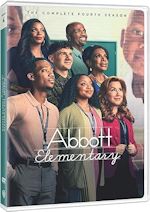
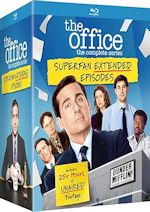
Happy's Place - Season One (Blu-ray) Two and a Half Men - The Complete Series (Blu-ray) Abbott Elementary - The Complete Fourth Season (DVD) I Love Lucy - The Complete Series - 75th Anniversary Edition (DVD) The Office - The Complete Series - Superfan Extended Episodes (Blu-ray)

11/04/25 - Happy's Place - Season One (Blu-ray) (DVD)
11/11/25 - Rick and Morty - Season 8 (Blu-ray) (DVD)
11/11/25 - SpongeBob SquarePants - The Complete Fifteenth Season (DVD)
11/11/25 - Two and a Half Men - The Complete Series (Blu-ray)
12/02/25 - Tom and Jerry - The Golden Era Anthology (1940-1958) (Blu-ray) (DVD)
12/16/25 - Lippy the Lion and Hardy Har Har - The Complete Series (Blu-ray)
12/16/25 - Wally Gator - The Complete Series (Blu-ray)
01/20/26 - The Woody Woodpecker and Friends Golden Age Collection (Blu-ray)
01/27/26 - The New Fred and Barney Show - The Complete Series (Blu-ray)
02/11/26 - Tom and Jerry - The Complete CinemaScope Collection (Blu-ray)
03/24/26 - Looney Tunes Collector's Vault - Volume 2 (Blu-ray)
04/11/26 - Abbott Elementary - The Complete Fourth Season (DVD)
04/21/26 - Famous Studios Champion Collection (Blu-ray) (DVD)
05/19/26 - I Love Lucy - The Complete Series - 75th Anniversary Edition (DVD)
05/19/26 - Looney Tunes Cartoons - The Complete Series (Blu-ray) (DVD)
07/14/26 - The Office - The Complete Series - Superfan Extended Episodes (Blu-ray)
07/28/26 - I Love Lucy - The Complete Series - 75th Anniversary Edition (Blu-ray)

More Recent and Upcoming TV DVD and Blu-ray Releases / TV Shows on DVD, Blu-ray and Prime Video / DVD Reviews Archive


Search Sitcoms Online:


Donate

Please make a donation if you can help with Sitcoms Online's web hosting costs. Thanks for your support!

We receive a small commission on all DVDs, Blu-rays, CDs, Books, and any other items ordered through our Amazon.com links as an associate. Thanks for using our links for your online shopping!

Reply
 
Thread Tools Search this Thread
Old 09-10-2015, 04:17 PM   #1
TMC
Member
Forum Idol
 
Join Date: Jan 09, 2001
Posts: 124,953
Default Orange is the new Hill Street Blues

http://www.avclub.com/article/orange...t-blues-205425

Quote:
Orange Is The New Black arrived out of nowhere last season as a fully formed alternative to the diminishing returns of the generic male antihero archetype. (Sorry fans of Ray Donovan. And Low Winter Sun. And House Of Cards.) The Netflix show, helmed by Jenji Kohan, based on the memoir of Piper Kerman, and populated predominately by female characters of relatively ambiguous morality, appeared at first to be a female spin on the antihero model: The white protagonist did a bad thing.

But the oft-replicated antihero model is, by now, very standard. One deeply flawed figure the audience feels equal parts attraction and repulsion toward serves as the black hole that draws in the rest of the characters. Drama ensues. With its sprawling cast of characters and casual serialization, Orange Is The New Black has proven to be something far more innovative. It’s not an antihero drama—it’s an ’80s workplace drama. The show resurrects the architecture of series like St. Elsewhere while reimagining it for a modern audience. There’s obviously one catch: Litchfield is not a workplace (for most of these characters). But it’s this particular revision of the workplace drama that makes Orange Is The New Black seem new and different.

The first workplace drama as we know it was Hill Street Blues, which debuted in 1981. Centered on a single police station in an unnamed metropolis, it introduced elements of serialization to the previously episodic and stand-alone world of cop shows like Mannix and The Mod Squad. Hill Street Blues built out a rich and varied cast of dynamic characters, all colored with humanity and depth. The success of Hill Street Blues spawned a boom for the genre—including St. Elsewhere and L.A. Law, which both proved that police stations weren’t the only workplaces worth exploring. The genre continued to expand throughout the ’90s with shows like NYPD Blue and ER, and it exists in adapted form today in shows like The Good Wife.

Structurally, Orange’s episodes work largely as stand-alone stories, with strands of serialization woven throughout to create a larger tapestry for the season as a whole. Friendships like the ones between Taystee and Poussey or Alex and Nicky were built out piecemeal, episode by episode, until late in the first season, when the audience found itself invested in the characters without realizing how it had gotten there. Much of this structure can be attributed to the decision to give each episode a featured inmate, a choice that hearkens back to another nontraditional heir to the workplace drama throne: Lost. This decision serves to further flesh out an already rich and layered universe, while also removing any need to feel beholden exclusively to the perils of the show’s protagonist, Piper Chapman.

And that’s another part of the workplace drama’s structure: a protagonist that can live at the edges of the story. While Hill Street Blues had its Frank Furillo and St. Elsewhere its Donald Westphall, those characters served as touchstones. They were charismatic, easily recognizable characters that oriented viewers in the world of the series; characters the show could always turn to for a quick moment of moral clarity, but didn’t have to focus on. Then, as audiences found themselves more comfortable with the series, these protagonists were shaded into something decidedly more complex. Piper Chapman plays this role in Orange Is The New Black—she’s introduced as a known quantity, a WASPy, entitled woman about to go on the adventure of a lifetime. But over time that summation is largely undone, revealing Piper to be a complicated composite of insecurity and impulse, a need to do good undone by so much incompetence. It’s on this decades-old foundation that Orange populates its modern world, filling its ranks with diverse, complicated characters: Lesbians, bisexuals, and heterosexuals are all represented as far as sexual encounters go, as well as both male and female masturbation. Transgender character Sophia also has an extensive storyline involving the maintenance of her marriage in the face of her transition and incarceration.

And that’s where Orange Is The New Black is most true to its ’80s workplace roots: Its fearlessness in the face of addressing potentially controversial issues. As heavy-handed (and laughable) as the attempts are now, Hill Street Blues and L.A. Law were both quite forward-thinking. Both addressed homosexuality and featured women who were fully integrated into the workplace. St. Elsewhere tackled issues related to the rise of AIDS. And all three explored larger social justice themes like poverty, the frequently unjust criminal justice system, and the struggles of inner city life. Orange picks up this torch with aplomb, taking on issues of gender, economic, and ethnic strife.

And that leads back to the show’s main conceit—that its prison is its workplace. Unsurprisingly, the most gutting social commentary made throughout the series addresses the prison-industrial complex. The portrayal of inmates grasping for sanity in an insane world leaves the audience questioning how one can expect to instill humanity in such an inhumane environment.

At heart, the central question for the characters on every workplace drama is: “How do I define myself in the face of [job]? What is it to [job]?” Whether that job is lawyer or doctor or cop, teacher or politician or journalist, the question is always the same: How does this career shape my life? In Orange Is The New Black, every character residing in Litchfield has the same unofficial job: survival. The question each character carries with them in their heart is, “What is it to survive?” Each character must answer that for themselves—and must find a way to find a way to survive to the best of their ability.

So intrinsic is this theme to the show that it even manifests itself in the guards. They’re entrusted with a modicum of power, but the guards are just as subject to the illogical trappings of the system—and like the prisoners, trying to escape it relatively unscathed. Even the most loathsome characters in the show—warden and prisoner alike—are searching for a way to survive Litchfield in one piece. It is that quest that unifies all and makes the series resonate on the same level as any other great workplace drama.

All of this leads to why the series feels so different and bracing from anything else on the air right now. By avoiding the strictures of the antihero show and embracing the workplace drama, Orange Is The New Black has given itself room to run. As it enters its second season, it does so in a place where it can do an entire episode centered on Piper, to the exclusion of everyone else, or it can do an episode in which Piper doesn’t appear at all. Such malleability is invaluable, and it wouldn’t be possible without the reinvention of one of television’s most storied structures. By returning to and repurposing the roots of the modern TV drama, Orange Is The New Black has found a way to make everything old fresh and new again.
TMC is offline   Reply With Quote
Reply


Posting Rules
You may not post new threads
You may not post replies
You may not post attachments
You may not edit your posts

BB code is On
Smilies are On
[IMG] code is On
HTML code is Off

Forum Jump


All times are GMT -4. The time now is 12:32 AM.


Although the administrators and moderators of the Sitcoms Online Message Boards will attempt to keep all objectionable messages off this forum, it is impossible for us to review all messages. All messages express the views of the author, and neither the owners of the Sitcoms Online Message Boards, nor vBulletin Solutions Inc. (developers of vBulletin) will be held responsible for the content of any message. The owners of the Sitcoms Online Message Boards reserve the right to remove, edit, move or close any thread for any reason.

Powered by vBulletin® Version 3.8.11
Copyright ©2000 - 2026, vBulletin Solutions Inc.