Sitcoms Online - Main Page / Message Boards - Main Page / News Blog / Photo Galleries / DVD Reviews / Buy TV Shows on DVD and Blu-ray

View Today's Active Threads (No Chit Chat/Chit Chat Only) / View New Posts (No Chit Chat/Chit Chat Only) / Mark All Boards Read / Chit Chat Board

Murphy Brown links and theme songs at Sitcoms Online / Murphy Brown Photo Gallery


Murphy Brown - The Complete First Season

Buy Murphy Brown - The Complete First Season on DVD

Sitcoms Online Message Boards - Forums  

Go Back   Sitcoms Online Message Boards - Forums > 1990s Sitcoms > Murphy Brown
Register Community View Today's Active Threads (No CC/CC Only) Search Photo Galleries Calendar FAQ

Notices

SitcomsOnline.com News Blog Headlines Facebook X/Twitter Bluesky Threads Instagram YouTube RSS

HBO Max Celebrates 25th Anniversary of Six Feet Under; Netflix Orders Dealies
Additional Fox Summer 2026 Dates; BET's Lot Patrol Premiere Date
Kids Make Me Angry Sneak Peek; Shrinking Adds Karen Gillan for Season 4
Netflix's A Different World Premieres September 24; Ted Danson Joins Elizabeth Banks Apple TV Comedy
Sitcom Stars on Talk Shows; This Week in Sitcoms (Week of June 1, 2026)
SitcomsOnline Digest: New Episodes of The Simpsons Headed Exclusively to Disney+; Release Date Set for Reboot of A Different World
Disney+ Announces Brand New The Simpsons Episodes; Remembering the Sitcom Stars and Crew Members We Recently Lost


New on DVD and Blu-ray

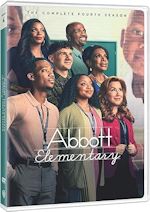
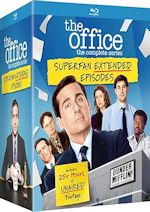
Happy's Place - Season One (Blu-ray) Two and a Half Men - The Complete Series (Blu-ray) Abbott Elementary - The Complete Fourth Season (DVD) I Love Lucy - The Complete Series - 75th Anniversary Edition (DVD) The Office - The Complete Series - Superfan Extended Episodes (Blu-ray)

11/04/25 - Happy's Place - Season One (Blu-ray) (DVD)
11/11/25 - Rick and Morty - Season 8 (Blu-ray) (DVD)
11/11/25 - SpongeBob SquarePants - The Complete Fifteenth Season (DVD)
11/11/25 - Two and a Half Men - The Complete Series (Blu-ray)
12/02/25 - Tom and Jerry - The Golden Era Anthology (1940-1958) (Blu-ray) (DVD)
12/16/25 - Lippy the Lion and Hardy Har Har - The Complete Series (Blu-ray)
12/16/25 - Wally Gator - The Complete Series (Blu-ray)
01/20/26 - The Woody Woodpecker and Friends Golden Age Collection (Blu-ray)
01/27/26 - The New Fred and Barney Show - The Complete Series (Blu-ray)
02/11/26 - Tom and Jerry - The Complete CinemaScope Collection (Blu-ray)
03/24/26 - Looney Tunes Collector's Vault - Volume 2 (Blu-ray)
04/11/26 - Abbott Elementary - The Complete Fourth Season (DVD)
04/21/26 - Famous Studios Champion Collection (Blu-ray) (DVD)
05/19/26 - I Love Lucy - The Complete Series - 75th Anniversary Edition (DVD)
05/19/26 - Looney Tunes Cartoons - The Complete Series (Blu-ray) (DVD)
07/14/26 - The Office - The Complete Series - Superfan Extended Episodes (Blu-ray)
07/28/26 - I Love Lucy - The Complete Series - 75th Anniversary Edition (Blu-ray)

More Recent and Upcoming TV DVD and Blu-ray Releases / TV Shows on DVD, Blu-ray and Prime Video / DVD Reviews Archive


Search Sitcoms Online:


Donate

Please make a donation if you can help with Sitcoms Online's web hosting costs. Thanks for your support!

We receive a small commission on all DVDs, Blu-rays, CDs, Books, and any other items ordered through our Amazon.com links as an associate. Thanks for using our links for your online shopping!

Reply
 
Thread Tools Search this Thread
Old 01-23-2014, 03:26 AM   #1
TMC
Member
Forum Idol
 
Join Date: Jan 09, 2001
Posts: 124,453
Default How Does Murphy Brown Hold Up? -- Vulture

http://www.vulture.com/2012/05/how-d...n-hold-up.html

Quote:
Background: It was twenty years ago this month that Vice-President Dan Quayle made moronic-election-narrative history by giving a speech in which he essentially blamed the recent Los Angeles riots on Murphy Brown. “Bearing babies irresponsibly is, simply, wrong,” Quayle told his California audience. “It doesn't help matters when prime-time TV has Murphy Brown — a character who supposedly epitomizes today's intelligent, highly paid, professional woman — mocking the importance of fathers by bearing a child alone and calling it just another ‘lifestyle choice.’” The night before on CBS, unwed Murphy had given birth to a baby boy on the season finale of the popular sitcom; it was the most watched prime-time show of the week. The tabloids loved Quayle’s speech (the Daily News: “Quayle to Murphy Brown: You Tramp!”) and President George H.W. Bush and Bill Clinton, campaigning for the fall election, both weighed in.

If FYI, the fictional weekly newsmagazine show around which the action at Murphy Brown centered, had covered the Quayle speech aftermath, they would surely have sent Murphy herself. The creation of former Vogue TV columnist Diane English, Murphy was a brash, single, fortysomething investigative reporter who fielded calls from Ghadafi and Cronkite, and got maced at the Democratic convention in ’68. But she wasn’t afraid to chase a juicy story for ratings, either.

Murphy Brown debuted in 1988 and ran for ten seasons. Reportedly, the network wanted twentysomething Heather Locklear to play the title role, but English fought for Bergen, and it’s impossible to imagine anyone else as Murphy. The Dan Quayle moment made her a symbol of nineties feminism, and nearly every Serious Topic she tackled — single motherhood, medical marijuana, and breast cancer — launched a national conversation and, often, conservative ire. By the fifth season, Murphy Brown was the most expensive show on television for advertisers. The show hovered in the top twenty of the Nielsen ratings for most of its run, and Bergen remains the only actress to have won five Emmys for playing the same character.

Nostalgia demographic: Baby Boomer women who saw themselves as Murphy-esque career pioneers; their thirtysomething daughters who grew up watching the show with them; Washington journalists pining for the glory days when they could credibly be cast as the good guys in a prime-time sitcom; Dan Quayle.

Fact-check: Despite the show’s cultural clout during its ten seasons on CBS, Murphy Brown was a flop in syndication, and the DVD of the show’s first season reportedly sold so poorly that plans to release future seasons were scrapped. (The high cost of the show’s Motown music soundtrack — more on that later — was also a factor.) But within the last few months, Murphy has popped back into the Zeitgeist. The cast reunited on Good Morning America in April, and English told TV Guide that she was in talks with CBS about producing a few pre-election specials. The current season of 30 Rock featured an episode titled "Murphy Brown Lied to Us," in which Murphy’s TV spirit-daughter, Liz Lemon, utters the title phrase to explain why she’s abandoned her dream of becoming a single mom.

I grew up watching Murphy Brown as a preteen in the Midwest with my own single working mom. In my misty memory, Murphy was the archetypal badass feminist, the rotating-secretary gag was a hoot, and the references to politics made me feel like a D.C. insider. Then again, at the same time I adored Murphy Brown, I also loved a short-lived sitcom called Thea in which the sassy title character’s catchphrase was “See ya!” Would Murphy Brown remain the groundbreaking, hilarious feminist comedy of my tween memory, or was it just another dated nineties workplace sitcom with absurd shoulder pads?

Let’s start with what doesn’t hold up. Murphy famously cycled through 93 secretaries over the course of the show’s run, dismissing all of them for one wacky reason or another. (Smoking in the office! Not speaking English!) The secretary gags are broad and gimmicky, and though I suppose they’re meant to illustrate Murphy’s toughness, they read like a serious problem with the secretarial pool at FYI’s network. The scenes at home with Murphy’s loopy house painter, Eldin — never a highlight, but a necessary plot mechanic so Murphy would have someone at home to talk with about the office — have taken on a grim pall since actor Robert Pastorelli was found dead of a heroin overdose in 2004, under renewed suspicion over his girlfriend’s shooting death. In one especially painful season-one scene, Eldin fights with a volatile girlfriend on Valentine’s Day.

Hey, remember PMS jokes? You will after you watch the first season of Murphy Brown, because there are tons of them, starting with Murphy attributing a rogue interview question in the pilot to her period. The first season also includes a noticeable number of Dan Quayle one-liners (Murphy’s ice-cold mom: “You can’t let people get away with shoddy service. It starts with overcooked meat and ends with President Quayle.”) You have to wonder if Quayle resented the show long before Murphy’s family-destroying “lifestyle choice.”

There is also so, so much dancing and lip-synching to Motown. Murphy sings solo to “Natural Woman” in her living room; she blasts “Signed, Sealed, Delivered” on her headphones at work; and the whole gang croons “You Keep Me Hangin’ On” during an on-air hostage situation. The motif reoccurs so often the show began to feel like Glee featuring middle-aged people who can’t sing or dance. Between Murphy Brown and The Big Chill, white Baby Boomers apparently spent the entire eighties belting out Motown hits in pastel blazers. But Murphy Brown still has its pleasures. Murphy’s co-workers at FYI go beyond the stock characters they sound like on paper (er, screen): Stiff anchorman Jim Dial, randy reporter Frank Fontana, ditzy features gal Corky Sherwood (who goes on to marry a lawyer named Will Forrest, GET IT?), and yuppie executive producer Miles Silverberg. Shockingly, the references to D.C. journalism aren’t quite as insider-y as they seemed to me as a Midwestern preteen, but, hey, I still like a good Ed Meese joke. And call me a sentimental old fool, but the ditzy blonde thing still has the power to crack me up, too.

When Corky pitches interviews with Indira Gandhi, Golda Meir, and Margaret Mead, only to find out none of them are alive, she yelps, “All women ... all famous ... all dead. I think I’m on to something!” I laughed, I admit it.
But the show’s biggest strength is its title character. Candice Bergen plays Murphy more broadly than I remembered, and the laugh track matches her occasional mugging, but she’s still a dynamite figure. If Mary Tyler Moore, Murphy Brown, and Liz Lemon are the sitcom world’s great trio of single ladies working in television, Murphy is notable for being not at all girlish, helpless, scatterbrained, naive, pathetic, or “adorkable” in any way. She is a grown-up who works hard, understands the sacrifices that come with that, enjoys sex, and is totally comfortable with her success. In a moment when TV is overflowing with girls, Murphy Brown is unmistakably a woman.
TMC is online now   Reply With Quote
Old 01-23-2014, 03:57 AM   #2
TMC
Member
Forum Idol
 
Join Date: Jan 09, 2001
Posts: 124,453
Default What makes an old TV show “dated” (and is “dated” always bad)?

http://www.avclub.com/article/what-m...ed-alway-56864

Quote:
Noel Murray & Todd VanDerWerff Jun 2, 2011 • 12AM

Noel: Todd, both you and I spend a lot of time watching older TV shows, both for pleasure and for work. You’ve written your Primers for ’70s and ’80s sitcoms; I’ve written my Very Special Episode columns that try to use older TV as a way to examine the qualities that make television a unique medium. And if you’re anything like me, I’m sure you’ve had the experience watching something that was acclaimed in its day and thinking: “Man, this does not hold up.” But what is it that makes some older TV shows feel dated? Is it the style? The references? Something else?

For me, one of the biggest culprits is an inflated sense of social importance. If I watch an old Ironside or Marcus Welby, M.D., for example, and the hero is working on a case involving drugs, or domestic abuse, or the generation gap, or sexual liberation, I can sense the writers straining to make a point, and more often than not it’s one rooted in preserving the status quo, not acknowledging that times may have changed. There’s an infamous Marcus Welby episode, for example, “The Other Martin Loring,” about a pudgy, depressed drunk whose wife is divorcing him because of his homosexual leanings. The doctor suggests that he’s not really gay, just afraid of being gay, and suggests therapy so he can learn to fight his urges and become normal again. The episode is fascinating to watch from a sociological perspective, but as entertainment, it’s painful, and certainly not the exemplar of “quality TV” that it once was. And I can think of dozens more examples, many of them bothersome because they’re more benign: an argument about women’s rights that ends with the woman essentially submitting to the man; an anti-racism message that reduces minorities to helpless non-entities, waiting for the hero to help; and so on.

What about you, Todd? What makes a show feel dated for you? And is “dated” always a deal-breaker?

Todd: I don’t necessarily find “datedness” a deal-breaker, simply because all TV eventually looks dated. TV’s such a reliable time capsule of whatever era it’s depicting that it’s all but impossible for a series to avoid aging. Even shows that aimed to keep topical references out of the mix, shows like Everybody Loves Raymond or The Dick Van Dyke Show, are inextricably linked to the eras in which they were produced. I was horrified to watch an early episode of Dick Van Dyke, in fact, that was more or less about how Laura Petrie had no business making suggestions to Rob about his work life because she was his wife and the home was her domain. The unexamined things we take for granted in whatever era become the things that horrify later generations. Put another way, The Wire and The Sopranos seem like ingenious records of the way we live today right now, but to our great-grandchildren, they’re going to seem as distant and trapped in amber as Upton Sinclair’s The Jungle (which has a similar journalistic sweep) seems to me now.

And, yeah, that’s true for every art form, but it’s always seemed especially true for TV. The medium is so tied to pumping out product that the very act of feeding the beast means that episodes will become more and more “of their time” as the series goes on, simply because the easiest place to find storylines (especially if you’re a workplace drama) is the newspaper. Yet at the same time, as you’ve mentioned, some shows seem to age more poorly than others. Both All In The Family and Murphy Brown engaged in rampant cultural and political references, but where it’s easy to overlook Archie Bunker complaining about inflation or liberal pinko communists and just laugh, it’s much harder to look past Murphy taking snide potshots at Dan Quayle, and that’s coming from someone who was cognizant of the big brouhaha over the show’s decision to make Murphy a single mother.

While I think self-importance certainly has a role to play in how dated TV becomes—just look at that famous episode of the 1967 Dragnet remake where a man on LSD paints himself blue for an example of one era’s self-seriousness becoming another’s camp—I also think it’s easy to underestimate the simple appeal of good craftsmanship. All In The Family lasts because it’s simply a better-crafted show than Murphy Brown. It has a strong core and a strong central conflict. It’s a series that’s really about something, where Murphy quickly lost sight of its initial goals in favor of making of-the-moment jokes. Similarly, Hill Street Blues, a series wrapped up in the social issues of the early ’80s, lasts because its producers were careful to make it a show about the interpersonal conflicts within the squad room. It’s easy for a show to get distracted from its central goal, but the ones that last are the ones that never take their eye too much off the ball.

But here’s another question: Are there particular genres or types of shows that age less quickly than others? Given the fact that we’re still watching The Twilight Zone and Star Trek, I’d be tempted to make a case for science fiction, but there are certainly dozens of shows that now just seem impossibly cheesy.

Noel: Sitcoms can be dicey, as you mention, if only because comedy writers love their jokey topical references. The reason Murphy Brown doesn’t hold up as well isn’t just the smugness of the characters and the writers—though that’s a big part of it—but that the show sometimes let topicality be an end in itself. Just sticking a famous name or a hot-button issue into a joke doesn’t make the joke any funnier. (Prediction: In about 10 years, sitcoms from this era that used “I saw it on YouTube” as a punchline will seem far less hip than they might right now.)

Also, sitcoms for some reason tend to get broader the longer they’re on the air, so what might’ve seemed funny at the time—just because viewers were used to the shows in question and their style—now seems strained. I’ve always been a defender of Friends, because to me it’s a prime example of slick, engaging, character-based situation comedy—the kind where the humor and the storytelling derives from the writers’ understanding of who these people are. But when I was working on our Inventory about TV characters on game shows, I re-watched the Friends where Joey appears on Pyramid—an episode from late in the show’s run—and was stunned by how bad it is. Everyone’s acting in that episode is so broad and abstracted, both from normal human behavior and from what had previously been established for their characters. It was painful to watch. I’ve seen the first five or six Friends seasons a few times in syndication, so I know they hold up fairly well, but I’d never re-watched those last few Friends years. The Pyramid episode seems to be a case of writers (and perhaps actors) getting into a rut and going for lazy laughs rather than taking the time to build a moment properly.

Humor in general often dates quickly, though I find I laugh just as easily an old Honeymooners or Car 54 episode as I do at today’s best sitcoms. And even when I don’t laugh, a good sitcom should be well-written and well-performed enough that I can appreciate it anyway. Even topical comedy still works if it’s done well. In fact, the topicality can have an upside. The Simpsons, for example, is a show that has always relied a lot on references, but in its heyday, it was so sharp that I think even someone who wasn’t alive when those episodes first aired can enjoy them. Plus, now they can look up those references and learn something, the way I did with Warner Bros. cartoons as a kid.

Todd: It’s the idea that sticking some sort of “funny-sounding” cultural reference into the midst of a script will automatically make lame jokes funnier that gets to me. I can’t count the number of episodes of shows I’ve watched this year that have had lame subplots based around sexting, where the characters spent lots of time just saying the word “sexting” with befuddled expressions as cutesy music boops along on the soundtrack. What the hell are the few remaining Chuck fans of the year 2061 going to make of this when they watch it? And every season, there’s some cultural topic or another that works its way into the middle of lots of shows, as though TV writers all read the same newspaper filled with lame trend stories. (Another this season was scripted shows commenting on the spate of reality shows about hoarders, and it seemed virtually every show’s Halloween episode was contractually required to feature a character—usually male—dressed as Lady Gaga.)

But the more I think about it, the more I wonder if the biggest problem in creating TV that doesn’t date is a problem that bedevils all TV: To make good TV, you have to think beyond the basic premise of the show, because the premise isn’t always going to seem as fresh as it does now. One of the things that prompted this question in my mind was watching a long string of ’80s sitcoms that somehow didn’t feel as fresh as the ’70s sitcoms I’d watched, despite having 10 years on the former. And the more I think about it, the more I realize that something like Kate & Allie hasn’t aged particularly well because it was a show that came up with a “daring” premise for the time—two divorced women live together after their marriages end—then figured its work was done. The joke-writing was fairly stale, despite solid performances from the lead actresses, yet the show was one of the most acclaimed of the ’80s, largely based on critics finding the premise cutting-edge. Now, in a world where the idea of a single woman raising a child doesn’t seem so provocative (and I’m shocked it was in the ’80s, all evidence to the contrary), it’s easier to see the flaws lying beneath the surface. A similar thing happened to Will & Grace, a show that was mostly praised for featuring gay characters and now seems shopworn, even in the early, better seasons.

Put another way (and to bring things off of sitcoms for a moment), the best TV pokes and prods at its premise, no matter how solid the premise is. The first time I confronted the idea that TV could age—and age poorly—was when I read a top-10 list by a newspaper critic as a teenager. It listed Buffy The Vampire Slayer as one of the top 10 shows of the season, and it offhandedly commented that the show, with its extensive number of cultural references, would seem stale within a couple of years. If you go forward a few years, you’d find a show that seemed to have solved that particular problem in Smallville, which assiduously avoided many cultural references outside of long-popular comic-book heroes and villains. Yet when I watch early episodes of Smallville, which wasn’t a bad show in its day, they seem hilariously of their time, while Buffy seems timeless, despite the fact that it keeps dropping references to late-’90s pop-culture items. I assume my kids won’t immediately know what it means to “Scully” someone like I do, but I’d hope the central ideas of Buffy, ideas about growing up and maturing, will remain resonant, and I hope they’ll enjoy the way the show keeps poking at its premise and underlying ideas until it figures out ways to challenge everything we think we know about the series. Smallville never did that, at least that I saw. I’m told the later seasons are better, and now its early seasons seem rote and tired, belonging to a bygone TV era that’s just 10 years ago.

So if I were to sum up what could make a TV series feel timeless, even with lots of cultural references and assumptions—like Buffy or All In The Family—I’d say that moving beyond the basic premise is the best way to ensure a long shelf life. Yet I’m sure a lot of people would say we’re barking up the wrong tree. Plenty of people would argue that Buffy and All In The Family may stay good shows, but that all TV is bound to get dated because of productions acting as a de facto time capsule. The themes of Buffy may be universal, but the ’90s hair and fashions aren’t. And nobody’s going to decorate their living room like the Bunkers did anymore. I’m wondering if you have any thoughts on this aspect of TV datedness, the idea of TV as time capsule.

Noel: Honestly? I love it. To me, every TV show and every movie is on some level a documentary, in that it records fashions, designs, musical trends, and even performance styles (which can change over time). That’s why I’ve never been as bothered by product placement as some people are. Sure, it’s annoying right now to see the Fringe heroes take great pains to show the camera their Sprint phones or whatever, but 10 years from now, both that phone and the blatantly artificial gesture to make sure we see the phone are going to become an era signifier. They’ll make the episode richer in replay value. Even those outmoded socio-political attitudes I referred to earlier are a gift in their way. Some of those formerly “quality” shows would be pretty tedious were it not for their datedness. (And I’m hopeful that some of my favorite current shows that rely on topicality, like The Good Wife, will continue to work down the road both as outstanding drama and as a document of the past.)

Even before I wrote about older TV, I watched older TV, for a number of reasons. Seeing how poorly or how well a show ages can be instructive, helping us to grasp that what seems so amazing on TV right now may not seem as good a decade from now. And I’m also addicted to the time-capsule element you mention. Watching shows from my youth—or from the era immediately before—is a way of getting back memories I thought I’d lost, whether it’s hearing a piece of music that reminds me of specific moments from the past or spotting a toy or a drinking glass that looks like one we had in our house.

Really, the older TV shows that interest me least are the ones that had paltry set-design budgets, and took place on minimally dressed stages. So I’d encourage modern TV producers to make their series look as dated as they can, especially if they’re making something that’s otherwise mediocre. Those shows will be tedious now, but think how useful they’ll be to the pop historians of the future.
TMC is online now   Reply With Quote
Old 01-23-2014, 10:09 AM   #3
tlc38tlc38
Every day’s a Dolly day!
Forum Star
 
tlc38tlc38's Avatar
 
Join Date: May 02, 2008
Location: I’m just travelin’ thru
Posts: 19,252
Default

I've been re-watching the series on Encore and it seems to be holding up just fine to me...brilliant writing always holds up.

Jim Dial is one of TV's finest characters EVER!
__________________
Give generously to them and do so without a grudging heart; then because of this the LORD your God will bless you in all your work and in everything you put your hand to.
Deuteronomy 15:10
In loving memory of my best friend, my Mama.
tlc38tlc38 is offline   Reply With Quote
Old 06-10-2014, 04:49 AM   #4
TMC
Member
Forum Idol
 
Join Date: Jan 09, 2001
Posts: 124,453
Default The Disappearance of Murphy Brown

I think Murphy Brown can be watchable if you simply look at it as a time capsule of what was going in during the late '80s on through the '90s. However, if you weren't old enough to remember living through that particular era, it's extremely hard to understand the context of what's being talked about. For example, there was a joke early on in its run in which I think Murphy makes a crack about Deborah Norville. I assume that this was done in reference to the big hubbub about Deborah Norville usurping Jane Pauley on The Today Show. The problem w/ this sort of thing now is that most people (including myself) more than likely primarily recognize/associate Deborah Norville as the longtime host of Inside Edition. I don't think that most people even remember Ms. Norville's time on Today (as she was replaced by Katie Couric shortly thereafter).

http://comforttv.blogspot.com/2014/0...phy-brown.html

Quote:
1. It Came Along Too Late
The original run of Murphy Brown (1988-1998) emerged at a time when viewers were no longer embracing sitcoms the way they had in previous decades. While many of the series’ characters had real-world counterparts that were immediately recognizable, the Murphy Brown dramatis personae never became archetypes. Today’s cable news channels have no shortage of attractive blonde females, some with dubious journalism credentials, yet no one would ever refer to one of them as a Corky Sherwood (played on the series by Faith Ford). Despite 10 years and nearly 250 episodes, the characters introduced by the series never penetrated the pop culture as deeply as Ted Baxter or Lou Grant.

2. It Was On Too Long
Speaking of which – even the diehard Murphy Brown fans out there would concede that the show lost its mojo somewhere around season 5 or 6. Series creator Diane English left, as did reliable supporting players Pat Corley and Grant Shaud. The addition of Lily Tomlin probably seemed like an inspiration but it weakened the chemistry of the newsroom scenes. The final season presented a story arc in which Murphy was diagnosed with breast cancer. Several sources report that these episodes triggered an increase in mammograms, so it’s hard to disparage shows that may have actually saved some lives. But would you want to watch them again?

3. It Was Too Current
Name-dropping was a rich source of humor on Murphy Brown. But how many people today would laugh at a Strom Thurmond joke? Combine that dated quality with a stridency of one-sided political opinion, and the result is a series that may have played well in its day but now offers the same experience as reading an old newspaper. Contrast this with The Mary Tyler Moore Show, a newsroom-centric show that aired 20 years before Murphy Brown but resisted taking strong positions on the issues of the day. Back then, the first rule of situation comedy was to entertain, not proselytize; why alienate half of your audience?

Last edited by TMC; 04-04-2022 at 05:56 AM.
TMC is online now   Reply With Quote
Old 10-01-2014, 09:36 PM   #5
Furienna
Member
Forum Veteran
 
Furienna's Avatar
 
Join Date: Oct 22, 2006
Location: Örnsköldsvik, Sweden
Posts: 6,277
Default

Well, as I come from Sweden and only was a kid during the show's initial run, I guess a lot of jokes went over my head. And to be fair, I had no idea who Dan Quayle was before this show made me find out. But still, I did like this show a lot when I used to watch it a couple of years ago. I just loved the dynamic between the characters.

Last edited by Furienna; 06-29-2017 at 11:36 AM.
Furienna is offline   Reply With Quote
Old 09-24-2015, 12:17 PM   #6
TMC
Member
Forum Idol
 
Join Date: Jan 09, 2001
Posts: 124,453
Default

Murphy Brown unfortunately, is one of those shows that in hindsight has limited appeal. What I mean, is that since it pretty much exclusively pandered towards baby-boomers (too was often drenched in protest-era nostalgia), it became hard to transcend generations. To give you a better idea, the token "senior" anchor (Jim) is depicted as an "old fuddy duddy" while the lone Gen X character (Miles) is often depicted as a moron.

Last edited by TMC; 06-29-2017 at 08:17 PM.
TMC is online now   Reply With Quote
Old 09-24-2015, 06:24 PM   #7
DJM77
Member
Forum Veteran
 
DJM77's Avatar
 
Join Date: May 15, 2001
Location: Missouri
Posts: 5,553
Send a message via ICQ to DJM77
Default

Quote:
Originally Posted by TMC
Murphy Brown unfortunately, is one of those shows that in hindsight has limited appeal. What I mean, is that since it pretty much exclusively pandered towards baby-boomers (to was often drenched in protest-era nostalgia), it became hard to transcend generations. To give you a better idea, the token "senior" anchor (Jim) is depicted as an "old fuddy duddy" while the lone Gen X character (Miles) is often depicted as a moron.
Wasn't Corky around the same age as Miles? I guess she was a bit of a moron at times too though.
__________________
Marge: There are only 49 stars on that flag.
Abe: I'll be deep in the cold, cold ground before I recognize Missouri!
DJM77 is offline   Reply With Quote
Old 06-29-2017, 11:28 AM   #8
Svenfan1234
Member
Forum Star
 
Join Date: Dec 12, 2015
Posts: 11,200
Default

It's 1000x better than shows like The Big Bang Theory!
__________________
[
Svenfan1234 is offline   Reply With Quote
Old 06-29-2017, 12:06 PM   #9
Furienna
Member
Forum Veteran
 
Furienna's Avatar
 
Join Date: Oct 22, 2006
Location: Örnsköldsvik, Sweden
Posts: 6,277
Default

Quote:
Originally Posted by TMC
Murphy Brown unfortunately, is one of those shows that in hindsight has limited appeal. What I mean, is that since it pretty much exclusively pandered towards baby-boomers (to was often drenched in protest-era nostalgia), it became hard to transcend generations. To give you a better idea, the token "senior" anchor (Jim) is depicted as an "old fuddy duddy" while the lone Gen X character (Miles) is often depicted as a moron.
Let me say this as as a member of Generation Y: I had no problems with the fact that Murphy was just a few years younger than my mother and belonged to the generation before mine. Because I could still enjoy the show and the interactions between Murphy and her friends.
Furienna is offline   Reply With Quote
Old 06-29-2017, 12:08 PM   #10
Furienna
Member
Forum Veteran
 
Furienna's Avatar
 
Join Date: Oct 22, 2006
Location: Örnsköldsvik, Sweden
Posts: 6,277
Default

Quote:
Originally Posted by DJM77
Wasn't Corky around the same age as Miles? I guess she was a bit of a moron at times too though.
She was more of a moron than Miles, if I remember correctly.

Quote:
Originally Posted by Svenfan1234
It's 1000x better than shows like The Big Bang Theory!
Indeed!
Furienna is offline   Reply With Quote
Old 06-29-2017, 03:08 PM   #11
visaman666
Member
Forum Regular
 
Join Date: Jan 06, 2007
Posts: 818
Default

Quote:
Originally Posted by Furienna
Let me say this as as a member of Generation Y: I had no problems with the fact that Murphy was just a few years younger than my mother and belonged to the generation before mine. Because I could still enjoy the show and the interactions between Murphy and her friends.
Generation Y? Don't you mean Generation X? I am a Gen Xer, and my mother was a few years older than Murphy.
visaman666 is offline   Reply With Quote
Old 07-11-2017, 12:54 PM   #12
Furienna
Member
Forum Veteran
 
Furienna's Avatar
 
Join Date: Oct 22, 2006
Location: Örnsköldsvik, Sweden
Posts: 6,277
Default

As I was born in 1984, that would make me a member of Generation Y. But my two older siblings (who were both born in the 1970s) are sure Generation X. Our mother was relatively old to have a third baby (nearly 38 years old) when I was born, so that is how I managed to have a Baby Boomer mother and still belong to the Generation Y.
Furienna is offline   Reply With Quote
Old 07-11-2017, 05:45 PM   #13
king of comedy
Member
Forum Veteran
 
Join Date: Aug 31, 2012
Location: New Jersey
Posts: 5,140
Default

Sorry but I can't stand it today. Candice Bergmans' stiff performance proves she is best at drama and supporting roles.
king of comedy is offline   Reply With Quote
Old 10-31-2017, 12:26 AM   #14
TMC
Member
Forum Idol
 
Join Date: Jan 09, 2001
Posts: 124,453
Default

https://www.damemagazine.com/2015/04...d-murphy-brown

Quote:
But the real reason Murphy has faded from view is that feminist progress in the 1980s and '90s was such a mixed bag. The sun was thankfully setting on Reagan’s Morning in America, but the Anita Hill-Clarence Thomas hearings made the limits of women’s liberation depressingly clear. The year 1992 was dubbed “The Year of the Woman” as more than 60 million women voters helped put 24 women in the House and five in the Senate. But the Gingrich Revolution in ’94 aimed its anti-family rhetoric of "family values" at every woman who earned a paycheck and viewed access to birth control and legal abortion as civil rights. The pendulum has been swinging back and forth ever since. We have 20 women in the Senate and we had a victory with United States v. Windsor, but we also have “religious exemptions” for dispensing birth control and wedding cakes.
TMC is online now   Reply With Quote
Old 09-03-2018, 02:51 AM   #15
TMC
Member
Forum Idol
 
Join Date: Jan 09, 2001
Posts: 124,453
Default

Besides being filled with dated political references (let's face it, who laughs at references to George H.W. Bush and Bill Clinton era staffers anymore) another major criticism that I've heard about Murphy Brown is that the writing when you get right down to it, was terrible. More to the point, the supporting cast lacks comic timing. For example, why did Faith Ford always have to shout her lines? I'm guessing that Murphy Brown was popular at the time because it was a show for baby boomer yuppies.
TMC is online now   Reply With Quote
Reply


Posting Rules
You may not post new threads
You may not post replies
You may not post attachments
You may not edit your posts

BB code is On
Smilies are On
[IMG] code is On
HTML code is Off

Forum Jump


All times are GMT -4. The time now is 04:40 AM.


Although the administrators and moderators of the Sitcoms Online Message Boards will attempt to keep all objectionable messages off this forum, it is impossible for us to review all messages. All messages express the views of the author, and neither the owners of the Sitcoms Online Message Boards, nor vBulletin Solutions Inc. (developers of vBulletin) will be held responsible for the content of any message. The owners of the Sitcoms Online Message Boards reserve the right to remove, edit, move or close any thread for any reason.

Powered by vBulletin® Version 3.8.11
Copyright ©2000 - 2026, vBulletin Solutions Inc.