Sitcoms Online - Main Page / Message Boards - Main Page / News Blog / Photo Galleries / DVD Reviews / Buy TV Shows on DVD and Blu-ray

View Today's Active Threads (No Chit Chat/Chit Chat Only) / View New Posts (No Chit Chat/Chit Chat Only) / Mark All Boards Read / Chit Chat Board


Sitcoms Online Message Boards - Forums  

Go Back   Sitcoms Online Message Boards - Forums > Classic Dramas/Dramedies > 1960s and 1950s Dramas/Dramedies > Batman
Register Community View Today's Active Threads (No CC/CC Only) Search Photo Galleries Calendar FAQ

Notices

SitcomsOnline.com News Blog Headlines Facebook X/Twitter Bluesky Threads Instagram YouTube RSS

Sitcom Stars on Talk Shows; This Week in Sitcoms (Week of June 15, 2026)
SitcomsOnline Digest: Tim Allen Still Wants Home Improvement Reboot; SpongeBob SquarePants Renewed
HBO's Life, Larry and the Pursuit of Unhappiness Details; Netflix's Little House on the Prairie Trailer
Prime Video's Elle Premieres July 1; FX's The Shards Launches August 5
Apple TV Trailer for Trying; Camp Snoopy Details
Ride or Die Trailer for Prime Video; Scooby-Doo Image Released for Netflix Live-Action Series
Tubi Announces More Comedies; Rivals Returns for More Season 2 Episodes in November


New on DVD and Blu-ray

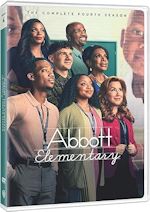
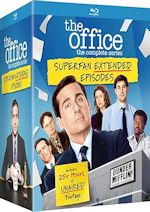
Happy's Place - Season One (Blu-ray) Two and a Half Men - The Complete Series (Blu-ray) Abbott Elementary - The Complete Fourth Season (DVD) I Love Lucy - The Complete Series - 75th Anniversary Edition (DVD) The Office - The Complete Series - Superfan Extended Episodes (Blu-ray)

11/04/25 - Happy's Place - Season One (Blu-ray) (DVD)
11/11/25 - Rick and Morty - Season 8 (Blu-ray) (DVD)
11/11/25 - SpongeBob SquarePants - The Complete Fifteenth Season (DVD)
11/11/25 - Two and a Half Men - The Complete Series (Blu-ray)
12/02/25 - Tom and Jerry - The Golden Era Anthology (1940-1958) (Blu-ray) (DVD)
12/16/25 - Lippy the Lion and Hardy Har Har - The Complete Series (Blu-ray)
12/16/25 - Wally Gator - The Complete Series (Blu-ray)
01/20/26 - The Woody Woodpecker and Friends Golden Age Collection (Blu-ray)
01/27/26 - The New Fred and Barney Show - The Complete Series (Blu-ray)
02/11/26 - Tom and Jerry - The Complete CinemaScope Collection (Blu-ray)
03/24/26 - Looney Tunes Collector's Vault - Volume 2 (Blu-ray)
04/11/26 - Abbott Elementary - The Complete Fourth Season (DVD)
04/21/26 - Famous Studios Champion Collection (Blu-ray) (DVD)
05/19/26 - I Love Lucy - The Complete Series - 75th Anniversary Edition (DVD)
05/19/26 - Looney Tunes Cartoons - The Complete Series (Blu-ray) (DVD)
07/14/26 - The Office - The Complete Series - Superfan Extended Episodes (Blu-ray)
07/28/26 - I Love Lucy - The Complete Series - 75th Anniversary Edition (Blu-ray)

More Recent and Upcoming TV DVD and Blu-ray Releases / TV Shows on DVD, Blu-ray and Prime Video / DVD Reviews Archive


Search Sitcoms Online:


Donate

Please make a donation if you can help with Sitcoms Online's web hosting costs. Thanks for your support!

We receive a small commission on all DVDs, Blu-rays, CDs, Books, and any other items ordered through our Amazon.com links as an associate. Thanks for using our links for your online shopping!

Reply
 
Thread Tools Search this Thread
Old 10-09-2025, 04:09 AM   #31
TMC
Member
Forum Idol
 
Join Date: Jan 09, 2001
Posts: 125,028
Default

What are the biggest creative mistakes that were made during the production of Batman (1966-68)?

Quote:
Based on Adam West's own recollections and analysis of the show's cancellation, the biggest creative mistakes made during the production of Batman (1966–68) were a shift toward a formulaic plot structure and the introduction of underwhelming new villains, particularly in the later seasons. A decline in ratings followed this change, which ultimately led to the show's cancellation.

A descent into formulaic stories

After the blockbuster success of the first season, producers chose to repeat the successful formula rather than explore other kinds of stories. Writer-producer William Dozier's decision to craft every episode around the same villain-driven plot structure quickly wore out its welcome with audiences.
  • Season 1: Viewership was "gangbusters" for the initial season, which was structured as a two-parter airing on back-to-back nights.
  • Seasons 2 and 3: The writing became "wrongheaded" and repetitive, as plots grew stale from following the same template. The plots relied on the same "familiar thrills" to target a younger audience, while the villains were intended to keep older viewers engaged. For star Adam West, this was a creative miscalculation.
  • Season 3: By the final season, the show shifted to a single, half-hour format, with cliffhangers now appearing in the middle of each episode. West noted that the season three scripts "lacked the wit and sparkle" of the earlier seasons and that this creative change removed "something important" from the show.

A failure to introduce compelling new villains

In the early seasons, the show drew on the core comic book rogues' gallery. However, the show's attempts to introduce new villains fell flat with the cast and audience.
  • Uninspired villains: West criticized some of the show's new villains, calling characters like the Archer, Ma Parker, and the Clock King "underwhelming".
  • Unused potential: The show missed opportunities to adapt compelling but darker comic book villains. For instance, the creators considered adapting Two-Face but decided he would be too grim for the show's campy tone.

Rushed and cheapened production

The quick turnaround and low budget led to noticeable production shortcomings that became more obvious as ratings declined and production was scaled back.
  • Cut corners and visible mistakes: Viewers and forum users have documented numerous production goofs, including visible stunt doubles, prop and continuity errors, and clear inconsistencies in set pieces.
  • Dangerous stunts: The rushed production led to unsafe working conditions. Burt Ward performed many of his own stunts to save money, resulting in multiple injuries, including a broken nose and burns from pyrotechnics.
  • Limited rights: After ABC canceled the series, the network destroyed the sets. Though NBC expressed interest in picking up the show, the cost of rebuilding everything was prohibitive. This was an issue because a legal dispute over character and episode ownership would prevent the show from being re-released for decades.
Quote:
The creative decline of the Batman TV series (1966–1968) in its later seasons was a major creative mistake, even if the show's campy style was deliberate. The production's quick and relentless efforts to capitalize on the show's initial "Bat-mania" led to a drop in quality, audience fatigue, and eventual cancellation.

Creative mistakes that led to the show's decline

Over-saturation of the core formula

The show's initial runaway success in the first season was driven by its unique, campy, two-part story structure. However, this format became creatively limiting over time and viewers grew tired of the formulaic cliffhanger plots.
  • The novelty of Batman and Robin being trapped in an impossible death trap each week wore thin for audiences watching episodes back-to-back.
  • With 60 episodes filmed in the first year alone, the quick production schedule prioritized quantity over maintaining creative quality.

Weakening of the storytelling in Season 3

By the third season, the show underwent major creative and financial changes that critics and fans perceived as a decline in quality.
  • A shorter format: Episodes were cut from two parts to a single 30-minute segment, which many fans believe led to weaker plots and rushed narratives.
  • Reduced budget: The show's third-season budget was slashed, resulting in visibly cheaper production values and a loss of key musical staff. Some sets in season three looked more like high school play backdrops than a network television production.
  • Departure of key talent: The show lost original lead writer Lorenzo Semple Jr., who helped create its unique tone.

Poor implementation of new creative choices

The show's creators attempted new ideas to combat the decline, but these changes were not enough to stop the ratings slide.
  • Introduction of Batgirl: While Yvonne Craig was praised for her performance as Batgirl, the character was used to attract new viewers and often sidelined Robin. The introduction was poorly executed and ultimately failed to reverse the ratings decline.
  • Muddled character dynamics: The addition of Batgirl, a new female love interest, created confusing and often underdeveloped romantic dynamics with Batman, which departed from the campy flirtation of the Catwoman episodes.

Failure to adapt to changing cultural tastes

Batman was a successful product of the "Pop Art" movement of the mid-1960s, a trend that faded by the late 1960s. The show's unchanging tone and increasingly stale formula didn't evolve with the times, causing it to lose relevance with its audience.

Consequences of these mistakes
  • Significant ratings drop: After a phenomenal first season, the ratings began to dip in the second season and plummeted by the third.
  • Cancellation: ABC ultimately canceled the show due to low ratings. A potential fourth season on NBC fell through when it was discovered the original sets had been prematurely destroyed.
Quote:
The production of the 1966-68 "Batman" television series is often celebrated for its campy charm and iconic status, but there were several creative missteps that have been noted over the years:

1. Tone Misalignment: While the series was intended to be a lighthearted take on the Batman mythos, some fans of the comic book felt that it strayed too far from the darker, more serious themes present in the source material. This tonal shift led to a division among the fanbase.

2. Character Simplification: Many characters were simplified or exaggerated for comedic effect. Villains like The Joker and The Riddler became more comedic than threatening, which detracted from their complexities in the comics.

3. Overuse of Catchphrases: The series relied heavily on catchphrases and gimmicks, such as "Holy (insert exclamation)!" This repetitive dialogue was entertaining but sometimes detracted from character development and storytelling depth.

4. Rushed Production: The show was produced quickly to meet the demands of its weekly schedule. This sometimes resulted in lower-quality scripts and production values, leading to inconsistent episodes.

5. Limited Character Arcs: The show often focused on episodic adventures, with little character development or overarching storylines. This made it difficult for audiences to connect with the characters on a deeper level.

6. Costume Choices: While the colorful and campy costumes became iconic, some felt they were too outlandish compared to the more serious tones of the comics, which could alienate some viewers.

7. Failure to Evolve: As the 1960s progressed and audience tastes began to shift towards more serious and complex storytelling, the show failed to adapt. This eventually contributed to its decline in popularity.

Despite these mistakes, the series remains a beloved part of Batman's legacy, influencing countless adaptations and interpretations of the character.
Quote:
The 1966–1968 “Batman” TV series, while iconic and beloved for its campy style, also had several creative mistakes and missteps that, in hindsight, limited its storytelling and artistic credibility. Here’s a thorough breakdown:

1. Overly campy, tonal inconsistency
  • Mistake: The show leaned heavily into camp humor, slapstick, and parody of comic books. While this was entertaining, it undermined the dark, brooding tone of Batman from the comics. Villains often did ridiculous things, and heroes used absurd gadgets with comic book sound effects.
  • Impact: Critics and some fans saw the show as a joke rather than a serious superhero adaptation, alienating those who wanted a grittier Batman.
  • Example: Villains pausing mid-fight to deliver witty monologues or onomatopoeia like “Bam!” and “Kapow!” flashing across the screen.

2. Stiff acting and wooden performances
  • Mistake: Many actors, including Adam West (Batman) and Burt Ward (Robin), delivered intentionally exaggerated, sometimes stiff performances. While this was stylistically consistent, it limited nuanced storytelling and emotional engagement.
  • Impact: Characters felt more like caricatures than real people, reducing the audience’s emotional investment.
  • Example: Adam West’s monotone, overly formal delivery of lines made Batman feel less human and more a parody of a hero.

3. Repetitive plot formulas
  • Mistake: Most episodes followed a predictable structure: villain hatches a scheme → Batman & Robin intervene → cliffhanger → next episode resolution.
  • Impact: Lack of narrative variety caused the show to feel formulaic, especially over three seasons.
  • Example: Multiple episodes ended with Robin trapped in a perilous, overly elaborate contraption, which became predictable and almost comedic.

4. One-dimensional villains
  • Mistake: While the villains were memorable (Joker, Riddler, Penguin, Catwoman), their characterization was superficial and cartoonish. Motivation was often thin and repetitive.
  • Impact: The moral stakes felt low; villains weren’t threatening or psychologically complex, limiting dramatic tension.
  • Example: The Riddler’s obsession with puzzles and wordplay was overplayed and overshadowed the danger he posed.

5. Excessive use of gimmicky cliffhangers
  • Mistake: Episodes ended with absurd “cliffhangers” (Robin dangling from a rope, trapped in a cage, etc.) with exaggerated peril.
  • Impact: Became predictable and made the show feel more like a Saturday morning cartoon than a live-action drama.
  • Example: Many 2-part episodes had nearly identical setups, such as villains gassing the heroes or strapping them to elaborate devices.

6. Limited exploration of Gotham
  • Mistake: Gotham City was depicted almost entirely as a studio set or city streets with minimal visual depth.
  • Impact: The setting lacked the dark, atmospheric qualities that later Batman adaptations would rely on to create tension and immersion.
  • Example: Interiors often looked like cardboard sets with painted backdrops, which made the city feel artificial.

7. Overemphasis on celebrity guest stars
  • Mistake: The producers frequently cast well-known celebrities as villains (Burgess Meredith as Penguin, Cesar Romero as Joker), which sometimes prioritized star power over story quality.
  • Impact: Some episodes were essentially vehicles for a celebrity cameo, detracting from plot development or character arcs.
  • Example: Episodes focused on quirky celebrity antics rather than meaningful villain-hero dynamics.

8. Limited storytelling depth due to 30-minute format
  • Mistake: Episodes were only ~25 minutes long, often split into two parts. The short runtime restricted complex plots, character development, or thematic exploration.
  • Impact: Made the series feel lightweight and repetitive, especially compared to comic book source material.

9. Over-reliance on “gimmicky” visual effects
  • Mistake: Use of visible wires, obvious backdrops, and comic-style onomatopoeia graphics (POW!, BANG!) emphasized spectacle over narrative immersion.
  • Impact: Hurt the show’s long-term credibility as a serious superhero adaptation.
  • Example: Batman fighting thugs while giant, floating “BAM!” signs appeared on screen—a stylistic choice that quickly aged poorly.

Summary

The creative mistakes of the 1966 “Batman” series were mostly stylistic and structural, stemming from a heavy focus on camp, predictable formulas, shallow character development, and gimmicks. While it created an enduring pop-culture icon, it failed to deliver the depth, darkness, and storytelling sophistication that later Batman adaptations would achieve.

If you want, I can make a ranked list of the 5 biggest creative mistakes in order of how damaging they were to the series’ quality. That way it’s easy to see which ones really hurt the show. Do you want me to do that?
TMC is online now   Reply With Quote
Reply


Posting Rules
You may not post new threads
You may not post replies
You may not post attachments
You may not edit your posts

BB code is On
Smilies are On
[IMG] code is On
HTML code is Off

Forum Jump


All times are GMT -4. The time now is 02:54 AM.


Although the administrators and moderators of the Sitcoms Online Message Boards will attempt to keep all objectionable messages off this forum, it is impossible for us to review all messages. All messages express the views of the author, and neither the owners of the Sitcoms Online Message Boards, nor vBulletin Solutions Inc. (developers of vBulletin) will be held responsible for the content of any message. The owners of the Sitcoms Online Message Boards reserve the right to remove, edit, move or close any thread for any reason.

Powered by vBulletin® Version 3.8.11
Copyright ©2000 - 2026, vBulletin Solutions Inc.