Sitcoms Online - Main Page / Message Boards - Main Page / News Blog / Photo Galleries / DVD Reviews / Buy TV Shows on DVD and Blu-ray

View Today's Active Threads (No Chit Chat/Chit Chat Only) / View New Posts (No Chit Chat/Chit Chat Only) / Mark All Boards Read / Chit Chat Board

General TV News and Discussion / View Latest Threads in General TV and Sub-Forums

TV Series on DVD/Streaming News and Discussion / Fantasy TV Channels/Schedules and Fictional TV Networks / Classic TV Schedules Archive / TV Theme Songs / Theme Song Lyrics: Requests and Archive

Broadcast Networks / ABC / CBS / Fox / NBC / The CW / UPN (1995-2006) / The WB (1995-2006) / MyNetworkTV / TV Ratings

Cable TV/Digital Channels / Antenna TV / BET / Bounce TV / Canadian Channels (CHCH) / Catchy Comedy / CMT / Comedy Central / Cozi TV / Dabl / Disney Channel / FETV / Freeform / FX / FXX / Great American Family / Great Entertainment Television (Great.) (formerly Get (get.) and getTV) / Hallmark Channel / H&I (Heroes & Icons) / The Hub / IFC / INSP / ION Television / Laff / Lifetime / Logo TV / MeTV / Nick at Nite / Nickelodeon / TeenNick / Oxygen / Retro TV / Rewind TV / Start TV / TBS / TNN / Spike TV / TNT / TV Land / TV One / Up TV (UPtv) / USA Network (USA) / WGN America / YTA TV (formerly GoodLife and AmericanLife)


Sitcoms Online Message Boards - Forums  

Go Back   Sitcoms Online Message Boards - Forums > General TV News and Discussion > Broadcast Networks > ABC
Register Community View Today's Active Threads (No CC/CC Only) Search Photo Galleries Calendar FAQ

Notices

SitcomsOnline.com News Blog Headlines Facebook X/Twitter Bluesky Threads Instagram YouTube RSS

Additional Fox Summer 2026 Dates; BET's Lot Patrol Premiere Date
Kids Make Me Angry Sneak Peek; Shrinking Adds Karen Gillan for Season 4
Netflix's A Different World Premieres September 24; Ted Danson Joins Elizabeth Banks Apple TV Comedy
Sitcom Stars on Talk Shows; This Week in Sitcoms (Week of June 1, 2026)
SitcomsOnline Digest: New Episodes of The Simpsons Headed Exclusively to Disney+; Release Date Set for Reboot of A Different World
Disney+ Announces Brand New The Simpsons Episodes; Remembering the Sitcom Stars and Crew Members We Recently Lost
CBC 2026-27 Programming Slate Includes New Original Comedies; Jay Shetty Podcast Heads to Netflix


New on DVD and Blu-ray

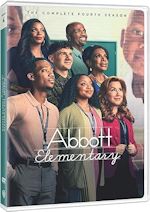
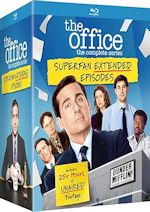
Happy's Place - Season One (Blu-ray) Two and a Half Men - The Complete Series (Blu-ray) Abbott Elementary - The Complete Fourth Season (DVD) I Love Lucy - The Complete Series - 75th Anniversary Edition (DVD) The Office - The Complete Series - Superfan Extended Episodes (Blu-ray)

11/04/25 - Happy's Place - Season One (Blu-ray) (DVD)
11/11/25 - Rick and Morty - Season 8 (Blu-ray) (DVD)
11/11/25 - SpongeBob SquarePants - The Complete Fifteenth Season (DVD)
11/11/25 - Two and a Half Men - The Complete Series (Blu-ray)
12/02/25 - Tom and Jerry - The Golden Era Anthology (1940-1958) (Blu-ray) (DVD)
12/16/25 - Lippy the Lion and Hardy Har Har - The Complete Series (Blu-ray)
12/16/25 - Wally Gator - The Complete Series (Blu-ray)
01/20/26 - The Woody Woodpecker and Friends Golden Age Collection (Blu-ray)
01/27/26 - The New Fred and Barney Show - The Complete Series (Blu-ray)
02/11/26 - Tom and Jerry - The Complete CinemaScope Collection (Blu-ray)
03/24/26 - Looney Tunes Collector's Vault - Volume 2 (Blu-ray)
04/11/26 - Abbott Elementary - The Complete Fourth Season (DVD)
04/21/26 - Famous Studios Champion Collection (Blu-ray) (DVD)
05/19/26 - I Love Lucy - The Complete Series - 75th Anniversary Edition (DVD)
05/19/26 - Looney Tunes Cartoons - The Complete Series (Blu-ray) (DVD)
07/14/26 - The Office - The Complete Series - Superfan Extended Episodes (Blu-ray)
07/28/26 - I Love Lucy - The Complete Series - 75th Anniversary Edition (Blu-ray)

More Recent and Upcoming TV DVD and Blu-ray Releases / TV Shows on DVD, Blu-ray and Prime Video / DVD Reviews Archive


Search Sitcoms Online:


Donate

Please make a donation if you can help with Sitcoms Online's web hosting costs. Thanks for your support!

We receive a small commission on all DVDs, Blu-rays, CDs, Books, and any other items ordered through our Amazon.com links as an associate. Thanks for using our links for your online shopping!

Reply
 
Thread Tools Search this Thread
Old 02-16-2024, 05:46 AM   #1
TMC
Member
Forum Idol
 
Join Date: Jan 09, 2001
Posts: 124,387
Default When Disney Bought ABC

https://www.youtube.com/watch?v=GapSrzbUZiw

Quote:
I look at Disney's long association with the ABC television network and what happened after it became part of the Mouse House.
TMC is online now   Reply With Quote
Old 07-12-2024, 08:51 PM   #2
TMC
Member
Forum Idol
 
Join Date: Jan 09, 2001
Posts: 124,387
Default

Inside the 1995 Media Merger That Changed Disney Forever
TMC is online now   Reply With Quote
Old 10-04-2024, 05:19 AM   #3
TMC
Member
Forum Idol
 
Join Date: Jan 09, 2001
Posts: 124,387
Default

Disney's purchase of ABC presumably, meant the beginning of the end of Miller-Boyett Productions' involvement with the network.

Quote:
Basically Miller/Boyett (the production company founded by Thomas Miller and Robert Boyett) was the company that made TGIF a thing in the first place -- they were the ones who created Perfect Strangers, Full House, Family Matters and Step by Step, they were the ones who made ABC the King of the Family Sitcom, they were the ones who established tropes like the iconic '80s theme songs that introduced those shows.

(And they had an older pedigree than that even, before Boyett joined the company was Miller-Milkis and they were the ones who made Happy Days, Laverne and Shirley and Mork & Mindy)

Miller/Boyett were royalty at ABC and what happened in the '90s was the story of them slipping from their throne, because NBC came in with their Must-See TV lineup on Thursday nights and the Family Sitcom started slipping into irrelevance with the rise of the Urban Young Adult Roommate Sitcom (Seinfeld and Friends)

And ABC got sold out to Disney in the middle of all this, and Miller/Boyett got really upset that Disney no longer had the working relationship the old ABC bosses did with them where they basically had free rein and started doing high-handed corporate stuff like forcing them to do an episode that was a commercial for Disney World, etc.
TMC is online now   Reply With Quote
Old 07-17-2025, 08:21 PM   #4
TMC
Member
Forum Idol
 
Join Date: Jan 09, 2001
Posts: 124,387
Default

Disneyland opened 70 years ago today: Watch Ronald Reagan serve as a correspondent for ABC's live coverage

Walt Disney opened Disneyland on July 17, 1955 with funding help from the then-fledgling ABC network. As part of the deal, ABC agreed to air the live special Dateline: Disneyland on the opening of the theme park, hosted by Art Linkletter and with future president Ronald Reagan serving as a correspondent. ABC also agreed to air a show called Disneyland, which would become The Wonderful World of Disney. ABC was a longtime partner with Disney, leading to The Walt Disney Company's acquisition of ABC in 1995.
TMC is online now   Reply With Quote
Old 07-17-2025, 09:24 PM   #5
TMC
Member
Forum Idol
 
Join Date: Jan 09, 2001
Posts: 124,387
Default

Quote:
Originally Posted by TMC View Post
Disneyland opened 70 years ago today: Watch Ronald Reagan serve as a correspondent for ABC's live coverage

Walt Disney opened Disneyland on July 17, 1955 with funding help from the then-fledgling ABC network. As part of the deal, ABC agreed to air the live special Dateline: Disneyland on the opening of the theme park, hosted by Art Linkletter and with future president Ronald Reagan serving as a correspondent. ABC also agreed to air a show called Disneyland, which would become The Wonderful World of Disney. ABC was a longtime partner with Disney, leading to The Walt Disney Company's acquisition of ABC in 1995.
July 17, 1955: Disneyland Opens

Quote:
July 17, 1955, 70 years ago: Disneyland opens in Anaheim, California, 26 miles southeast of Los Angeles.

Walt Disney, head of the film studio that bore his name, based it on Henry Ford's Museum and Greenfield Village, in the Detroit suburbs, having enjoyed its Main Street concept and steamboat rides. He had also been inspired by such places as Colonial Williamsburg in Virginia and the 1939-40 New York World's Fair.

The opening day was a disaster. It was open only to invited guests and the media, but about half of the 28,000 people there had bought counterfeit tickets or climbed over the fence. Traffic to get in was as bad as for a major sporting event.

And the temperature was 101 degrees. (Most of Southern California had been desert before L.A. was built on it and then expanded out, after all.) The local plumbers' union was on strike. As a result, the water pressure was such that Disney was given a choice of having working drinking fountains or working public toilets. He chose the toilets, which was unquestionably the right move. But since Pepsi-Cola was one of the sponsors, having non-working drinking fountains made it look like a cynical move to sell more Pepsi.

And the vendors didn't have enough food. The heat also meant that some of the asphalt that had just been poured didn't have time to fully cool, and some women's high heels sank into it, tripping them up and injuring some.

Usually being media-savvy, Disney wanted the events televised nationwide, and got ABC to broadcast it, with some of his conservative Hollywood friends like Art Linkletter, Bob Cummings and... Ronald Reagan. But many guests tripped over the large TV camera cables of the era. Cummings was caught kissing a dancer. Linkletter tried an "over to you" to Cummings over and over again, but a technical issue made it impossible, and he ended up looking very foolish on live TV. (It was Linkletter's birthday, too: He was 43.)

For the rest of his life, Disney referred to the day as "Black Sunday," and accepted the next day, July 18, as Disneyland's "official birthday." After his death, though, the park began to restore the July 17 birthday.

The original park had 5 main sections, which have since been added onto. Main Street, U.S.A. was patterned after a typical Midwest town of the early 20th Century -- specifically, the one Disney himself grew up in, during the 1900s and 1910s: Marceline, in north-central Missouri, which now has a museum in Disney's honor.

Adventureland was "designed to recreate the feel of an exotic tropical place in a far-off region of the world," as Disney put it, "far from civilization, in the remote jungles of Asia and Africa." Being in the Western U.S., and this being the early days of television, when Western movies were big, there pretty much had to be a Wild West-themed place, and it was named Frontierland.

Fantasyland was inspired by such Disney cartoon classics as their versions of the stories of Snow White and the Seven Dwarfs, Cinderella, Alice in Wonderland and Peter Pan. Its centerpiece, and the park's symbol, is the 77-foot-high Sleeping Beauty Castle. And Tomorrowland was especially inspired by New York 1939, as an idea of what the future would look like -- keeping in mind that, in 1955, space travel was still just a concept.

All of which allowed Disneyland to rebound from the lousy Day One to become what it billed itself as: "The Happiest Place On Earth," one that denied the existence of the troubles of post-World War II America: The Cold War, smog, suburban banality... and racial strife. It would be a while before Disneyland's employee roster was desegregated, and even longer before there was enough of a black middle class in America to provide enough of a black customer base.

On October 1, 1955, 76 days after Disneyland opened, The Honeymooners premiered on CBS. Formerly a sketch on The Jackie Gleason Show, Gleason spun the show off as a half-hour sitcom. The premiere episode featured Gleason's Ralph Kramden facing the demand of his wife Alice, played by Audrey Meadows, for something they did not yet have, but most families now seemed to: A television set. But Ralph hadn't even gotten a telephone -- or, something that always bugged my mother, a kid at the time, curtains for the kitchen window, the only window visible on the stage set.

Ralph told Alice he worked hard for his money -- no question about that, he was a bus driver in New York -- and that she should be lucky to live the way she does, in their small apartment in Brooklyn, without modern amenities. Alice went along with it, in the most sarcastic of fashions: "It's a regular Disneyland!"

She pointed out the window, at the tenements, and the laundry lines between them: "That's my Fantasyland!" She turned on the faucet of the kitchen sink. What came out of it? Water? Nope, just a weird knocking sound. "I never know what's going to happen with it," she said. "That's my Adventureland. That stove and that icebox: That's Frontierland. The only thing missing, Ralph, is The World of Tomorrow. I have nothing in my Disneyland from The World of Tomorrow!"

Ralph: "You want The World of Tomorrow? I'll show you The World of Tomorrow: You're going to the Moon!"

In 1966, two and a half miles to the east, across Interstate 5, what is now Angel Stadium of Anaheim opened, as the home of the baseball team then known as the California Angels, but now again called, as they originally were, the Los Angeles Angels. Jokes about the Angels playing "at Disneyland" have abounded ever since. But, between them, the Angels and Mickey Mouse have made the City of Anaheim grow by leaps and bounds, to the point where it's no longer just a giant suburb of L.A., but a real city in its own right, of 350,000 people.
TMC is online now   Reply With Quote
Old 10-05-2025, 04:54 AM   #6
TMC
Member
Forum Idol
 
Join Date: Jan 09, 2001
Posts: 124,387
Default

What were the biggest mistakes that The Walt Disney Company made during its ownership of the American Broadcasting Company (ABC)?

Quote:
Here’s a breakdown of many of the biggest mistakes (or serious missteps) that The Walt Disney Company made in its ownership of ABC (after acquiring Capital Cities/ABC in 1995) — what didn’t work, often with hindsight, what the costs were, etc. If you like, I can contrast those with what Disney got right, to see what balanced the trade‑offs.

Key Mistakes Disney Made with ABC

1. Overpaying for the Acquisition / High Debt Burden
  • Disney’s purchase of Capital Cities/ABC in 1995 cost about $19 billion. It was a major bet.
  • That deal significantly increased Disney’s debt/financial leverage. Some of the gains from synergy did come, but the cost base and expectations were very high.
  • Because ABC was a broadcast network with exposure to advertising revenues (which are volatile, especially as cable and streaming rose), the risk of revenue decline was always present. The high cost made the downside steeper.

2. Cultural Clash & Loss of ABC’s Autonomy / Identity
  • ABC had a certain culture and creative identity before the acquisition. Under Disney, there were complaints that ABC lost some of its institutional freedom. Decision‑making became more centralized; there was more oversight and less tolerance for projects that didn’t clearly align with corporate synergy or metrics.
  • Some ABC executives were uncomfortable with the way Disney would push for use of ABC as a promotional vehicle (or to support Disney’s film studios, etc.). For instance, using ABC to promote Disney films in special programming even when box office underperformed. Critics saw this as dilution of trust or editorial misalignment.

3. Cost-Cutting that Weakened News Division & Programming
  • After the acquisition, ABC’s news division (and entertainment programming more broadly) went through rounds of layoffs, bureau closures, and budget reductions.
  • Some of those cuts appear to have undermined ABC’s ability to compete in quality journalism, global reporting, and to respond to emerging platforms. The perception developed that ABC News was not as strong or as “first” in breaking issues as before.

4. Missed Opportunities in Expanding Broadcast into Cable / Multi‑Platform News Early
  • After the acquisition, there were plans (or at least internal discussion) to build a 24‑hour ABC cable news network. But those plans were scrapped.
  • As media evolved, networks that did build strong multi-platform news operations (or cable plus digital) had advantages. By delaying or withdrawing investment in this area, ABC (under Disney) lost potential leadership.

5. Ratings Decline and Programming Slippage
  • ABC was often top of its game in network news and entertainment prior to 1995. But afterward it began to drop relatively in ratings in many key time slots. Some “must‑watch” shows lost audience. Serialized dramas were less dominant; ABC sometimes lagged behind competition in attracting younger demographics.
  • Disney sometimes over‑relied on existing programming successes, and was less nimble or less daring in some entertainment content strategy, which in a changing environment (more cable, more niche, then streaming) reduced ABC’s competitive edge.

6. Overemphasis on Synergy Over Editorial / Programming Creativity
  • Disney’s belief in synergy (using ABC to promote Disney movies and leveraging Disney’s production assets) sometimes meant that some programming decisions were made more for cross‑promotion than purely for audience appeal or long‑term show development. This can limit risk‑taking and innovation.
  • Some shows or projects that ABC had been considering with outside partners were cancelled or shelved because Disney wanted to favor its in‑house production capabilities. This narrowed the pool of creative voices.

7. Slow Adaptation to Digital Streaming / Changing Consumption
  • ABC (and Disney’s broadcast network operations more generally) were somewhat slower than some rivals in adjusting to streaming/digital platforms. As viewers shifted, that hurt broadcast ratings and advertising revenues. (Though to be fair, Disney has made many moves in streaming, but the broadcast side has experienced decline.)
  • Also, reliance on linear TV ad revenue made ABC vulnerable as cord‑cutting, streaming, and changes in viewer habits picked up pace.

8. Regulatory & Political Exposure
  • As ABC is a major broadcast network, it’s subject to more rigorous regulation, FCC oversight, political scrutiny, free-speech/neutrality concerns, etc. Under Disney's ownership, there have been moments of tension — e.g. public criticisms of bias, concerns about ABC’s capacity to cover Disney fairly (conflict of interest), etc.
  • These exposures make ABC more fragile in a polarized or regulatory‑intense media climate.

9. Underestimating the Value Decline in Broadcast Television Over Time
  • The media landscape changed rapidly: cable proliferation, streaming, digital advertising, shifting consumer behavior, on‑demand viewing, etc. Disney’s initial calculations assumed broadcast TV would continue to generate strong returns for many years. While some of that remains true (especially for live sports, etc.), the decline in broadcast viewership and ad revenue has made that assumption more risky.
  • Disney sometimes did not move fast enough to re‑allocate resources away from less profitable broadcast programming toward streaming or more promising digital models.

10. Brand Perception Challenges
  • There were occasional public relations missteps or image issues: e.g. remarks by executives that suggested Disney’s executives didn’t fully appreciate the nuances of ABC’s role, or decisions that appeared to put corporate interests ahead of journalistic independence. These can erode trust among viewers, advertisers, and affiliates.
  • Also, with broadcast networks, there’s often more expectation of cultural responsibility — more scrutiny. Disney’s size and other business lines made some of ABC’s programming decisions more controversial.

What These Added Up To

Because of those mistakes (or combinations of them):
  • ABC has declined in influence relative to its post‑acquisition status. Network share in key demographics dropped.
  • Revenue from advertising and from programming had to be supported by stronger cross‑business synergies (e.g. Disney using ABC as promotional vehicle).
  • The network is under pressure in recent years, from cord‑cutting, streaming alternatives, declining affiliate fees, etc.
  • The perceived value of ABC inside Disney seems smaller now, with analysts sometimes recommending selling it off, shutting down broadcast operations, or moving more content exclusively to streaming platforms.
TMC is online now   Reply With Quote
Old 10-05-2025, 05:08 AM   #7
TMC
Member
Forum Idol
 
Join Date: Jan 09, 2001
Posts: 124,387
Default

How did the American Broadcasting Company (ABC) change after The Walt Disney Company purchased the television network?

Quote:
The American Broadcasting Company (ABC) underwent significant changes—both operational and cultural—after The Walt Disney Company acquired it in 1995 as part of its $19 billion purchase of Capital Cities/ABC. This acquisition was one of the most consequential media mergers of the 1990s and marked Disney’s bold move to integrate a major broadcast network into its entertainment empire.

Here’s a breakdown of how ABC changed after Disney took over:

📺 1. Shift Toward Corporate Synergy
🔄 What changed:
  • ABC became a promotional vehicle for Disney’s broader portfolio: movies, theme parks, merchandise, and later, streaming services.
  • The network increasingly prioritized cross-promotion with Disney-owned properties (e.g. airing specials for Disney movies, showcasing Disney Channel stars, etc.).

💡 Example: Wonderful World of Disney returned as a regular feature, rebranded to highlight Disney’s legacy.

Benefit:
  • Gave Disney greater control over how its content reached audiences.

Downside:
  • Critics and insiders said ABC lost some editorial independence and felt more like a corporate arm than a standalone network.

📉 2. Decline in Ratings and Network Identity
🔄 What changed:
  • In the late 1990s and early 2000s, ABC lost ground to competitors like NBC, CBS, and Fox in both prime-time ratings and news credibility.
  • The network struggled to launch new hit shows consistently, especially after earlier successes like Home Improvement, Roseanne, and TGIF sitcoms declined.

⚠️ The Who Wants to Be a Millionaire craze briefly revived ratings, but overreliance led to audience fatigue.

Result:
  • ABC lost its identity as a creative leader, often seen as lagging behind in innovation and youth engagement until the mid-2000s.

🎭 3. Programming Strategy Reboot
🔄 What changed:
  • After several years of decline, Disney reshaped ABC’s programming in the mid-2000s, launching a slate of highly serialized, prestige dramas:
    • Lost (2004)
    • Desperate Housewives (2004)
    • Grey’s Anatomy (2005)

✅ Result:

This marked a creative resurgence for ABC, helped by then-Disney executive Bob Iger’s renewed focus on content quality.

📰 4. Cuts to ABC News & Missed Expansion Opportunities
🔄 What changed:
  • ABC News faced budget cuts, bureau closures, and staff reductions under Disney ownership.
  • Plans for an ABC cable news channel (to compete with CNN/MSNBC/Fox News) were shelved in favor of focusing on profitability.

Impact:
  • ABC News lost ground to rivals in 24-hour coverage and innovation, and internal morale reportedly suffered.

🎯 5. Increased Focus on Family-Friendly, Brand-Safe Content
🔄 What changed:
  • Under Disney, ABC became more careful about the tone and content of its programming.
  • Emphasis on avoiding controversy and aligning with Disney’s “wholesome” brand image impacted creative risk-taking.

Consequence:

Some edgy or experimental content (especially compared to Fox or HBO) was passed over or toned down.

📱 6. Digital & Streaming Strategy Shift (Eventually)
🔄 What changed:

Initially slow to adapt to digital trends, ABC eventually became a launch platform for Disney’s streaming ventures.

Shows were integrated into platforms like Hulu and later Disney+, with ABC content increasingly serving as a content pipeline for digital audiences.

🎥 Example: ABC Studios (now ABC Signature) produced content that appeared across Disney’s streaming services.

👥 7. Leadership & Structural Integration
🔄 What changed:
  • ABC was brought under Disney’s television division, with leadership shuffled several times to align it more tightly with the company's overall media strategy.
  • This led to greater corporate control and less network autonomy.

🧠 Summary: Key Changes to ABC Under Disney Ownership

| **Category** | **Pre-Disney** | **Post-Disney** |
| ------------------------ | ------------------------------------- | ------------------------------------------------- |
| **Ownership & Autonomy** | Independent broadcast network | Integrated into Disney corporate structure |
| **Programming** | Variety of shows with strong identity | Shifts to Disney-aligned, family-safe programming |
| **News Division** | Competitive, respected globally | Budget cuts, lost expansion opportunities |
| **Audience Strategy** | Mass appeal, broad demos | Family-oriented, brand synergy-focused |
| **Creative Risk** | Willing to take genre/format risks | More cautious; reputation management prioritized |
| **Streaming/Digital** | No major platform | Later contributor to Hulu, Disney+, and ABC apps |

📌 Final Verdict

Disney’s acquisition of ABC turned the network into an essential cog in its content machine — helpful for Disney, limiting for ABC. While there were periods of creative revival (Lost, Grey’s Anatomy, etc.), the overall result was a corporatized, risk-averse, and synergy-focused version of what was once a more independently spirited network. Over time, ABC became less of a network with its own identity and more of a platform to distribute Disney’s broader IP and promotional interests.
TMC is online now   Reply With Quote
Old 10-05-2025, 05:20 AM   #8
TMC
Member
Forum Idol
 
Join Date: Jan 09, 2001
Posts: 124,387
Default

Quote:
Originally Posted by TMC View Post
What were the biggest mistakes that The Walt Disney Company made during its ownership of the American Broadcasting Company (ABC)?
What were the pros and cons of The Walt Disney Company's ownership of the American Broadcasting Company (ABC)?

Quote:
The Walt Disney Company’s ownership of ABC (American Broadcasting Company), beginning in 1995, was one of the most significant media consolidations of the modern era. Over the decades, the relationship has yielded both major strategic benefits and serious challenges—for both ABC and Disney.

Here’s a balanced look at the pros and cons of Disney’s ownership of ABC:

Pros of Disney’s Ownership of ABC
1. Massive Distribution Platform for Disney Content
  • ABC gave Disney a nationwide broadcast network to promote and distribute its films, TV shows, theme parks, and products.
  • Disney used ABC to air specials, cross-promote releases, and introduce Disney Channel stars to wider audiences.

📺 Example: The Wonderful World of Disney revived as a family programming block.

2. Enhanced Advertising Revenue & Market Reach
  • ABC’s reach into nearly every U.S. household provided Disney with a powerful ad-based platform, particularly for family and general audiences.
  • Prime-time, sports, and news slots generated billions in annual revenue.

💰 It became a key pillar in Disney’s “multi-platform” ad strategy.

3. Creative Successes from In-House Studios

After integrating ABC, Disney could funnel more content through ABC Studios (now ABC Signature), controlling both production and distribution.

This led to a string of hits in the 2000s:
  • Lost
  • Desperate Housewives
  • Grey’s Anatomy
  • Modern Family

🧠 ABC benefited from Disney's financial resources and marketing muscle.

4. Synergy with ESPN and News Divisions
  • The Capital Cities/ABC deal also gave Disney ESPN, which became far more valuable than ABC itself.
  • ESPN has consistently been one of Disney’s most profitable assets, particularly in sports broadcasting and licensing.

⚽ ABC and ESPN have shared sports rights, bolstering both networks.

5. Vertical Integration Advantage

Owning both a content studio and a broadcast network gave Disney more control over:
  • Programming schedules
  • Licensing rights
  • Monetization across platforms (later including Hulu and Disney+)

🔁 Streamlined control over the entire content supply chain.

6. Strategic Leverage in Cable and Streaming Transitions
  • ABC helped Disney build its TV audience base, which later transitioned to streaming.
  • Disney used ABC to push content to Hulu, and later Disney+, keeping the network relevant despite declines in linear TV.

Cons of Disney’s Ownership of ABC
1. Declining Broadcast Relevance & Ratings
  • Over time, ABC lost significant audience share, especially among younger viewers migrating to cable and streaming.
  • Disney struggled to keep ABC competitive with CBS, NBC, and Fox, especially in live entertainment and hit show development in the 2010s and beyond.

📉 ABC fell behind in the "Big 4" network rankings.

2. Cultural and Editorial Clashes
  • ABC's news division reportedly suffered under Disney’s tight corporate structure, facing budget cuts and reduced editorial autonomy.
  • Some journalists and producers felt stifled by Disney’s emphasis on brand protection and synergy.

🗞️ ABC News lost some prestige, and plans for a 24/7 news channel were shelved.

3. Over-Emphasis on Corporate Synergy
  • Disney often used ABC as a promotional tool, which at times hurt the network’s creative identity.
  • Programs were greenlit (or promoted) for synergy rather than quality, and outside producers were sometimes passed over in favor of in-house content.

⚠️ This narrowed creative diversity and risk-taking.

4. Missed Digital & Cable Opportunities
  • ABC could have been an early innovator in cable news or digital broadcasting, but those investments were minimized or abandoned.
  • While ESPN thrived, ABC was left to ride the declining wave of broadcast television without a strong multi-platform transformation strategy in place until much later.

5. Reputation Risk from Broader Disney Controversies
  • As part of Disney, ABC has sometimes been pulled into political, cultural, or legal controversies affecting the parent company (e.g. content boycotts, accusations of political bias).
  • This has added pressure to ABC’s content and news decisions that independent networks might avoid.

6. Confused Brand Identity
  • Under Disney, ABC became harder to define: not as edgy as Fox, not as prestige-oriented as HBO or Netflix, and not as stable as CBS.
  • Efforts to align ABC with Disney’s "family-friendly" brand limited the network’s ability to experiment with more mature or controversial content.

🧠 Summary Table: Pros vs. Cons

| **Category** | ✅ **Pros** | ❌ **Cons** |
| ------------------------- | ----------------------------------------------- | ---------------------------------------------------------- |
| Distribution | Access to nationwide network for Disney content | ABC became a promotional tool, not a creative driver |
| Revenue | Boosted ad and licensing income | Broadcast ad revenue declined sharply over time |
| Creative | Hit shows produced via ABC Studios | Over-reliance on synergy weakened creative innovation |
| News & Journalism | Added legitimacy and reach for Disney | Budget cuts, lost opportunities in 24/7 cable/digital news |
| Streaming Transition | ABC helped drive early Hulu/Disney+ content | Late pivot to streaming; brand diluted by broader strategy |
| Brand & Culture | Stronger vertical integration | Tension between editorial independence and corporate goals |
| Sports Synergy (via ESPN) | ESPN–ABC sports partnership thrived | ABC's sports coverage overshadowed by ESPN dominance |

🧾 Final Verdict

Disney’s ownership of ABC was financially strategic and creatively fruitful—for a time. ABC played a vital role in Disney’s ecosystem, helping promote franchises, launch shows, and drive advertising revenue. However, over the long term, ABC became something of a secondary player in Disney’s portfolio, overshadowed by ESPN, Disney+, Marvel, and Pixar.

Today, ABC faces an identity crisis amid declining broadcast viewership and industry speculation that Disney might sell off or spin off the network.
TMC is online now   Reply With Quote
Reply


Posting Rules
You may not post new threads
You may not post replies
You may not post attachments
You may not edit your posts

BB code is On
Smilies are On
[IMG] code is On
HTML code is Off

Forum Jump


All times are GMT -4. The time now is 05:29 AM.


Although the administrators and moderators of the Sitcoms Online Message Boards will attempt to keep all objectionable messages off this forum, it is impossible for us to review all messages. All messages express the views of the author, and neither the owners of the Sitcoms Online Message Boards, nor vBulletin Solutions Inc. (developers of vBulletin) will be held responsible for the content of any message. The owners of the Sitcoms Online Message Boards reserve the right to remove, edit, move or close any thread for any reason.

Powered by vBulletin® Version 3.8.11
Copyright ©2000 - 2026, vBulletin Solutions Inc.