View Today's Active Threads (No Chit Chat/Chit Chat Only) / View New Posts (No Chit Chat/Chit Chat Only) / Mark All Boards Read / Chit Chat Board
|
|
|||||||
 |
|
|
Thread Tools | Search this Thread |
 02-27-2015, 01:56 PM
|
#1 |
|
Freakshow
Moderator
Forum Icon 
Join Date: Feb 01, 2008
Location: Brooklyn, NY
Posts: 57,312
|
 EP Carlton Cuse Looks Back on "Brisco County, Jr.", "Martial Law", "Black Sash"
Resume Review: "Lost" and "Bates Motel" Boss Carlton Cuse Looks Back on his Long and Unique Career
by Natalie Abrams 2/27/15 Tell me about the creation of "The Adventures of Brisco County, Jr." 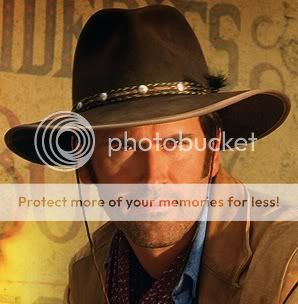 "Brisco" was fantastic. It was something that I’d been approached by Bob Greenblatt, who was an executive at FOX at the time, and I had been working with a feature writer named Jeffrey Boam, helping to develop Indiana Jones and the Last Crusade. Bob Greenblatt said, “I would love to do Indiana Jones for television.” I literally concocted the idea for "Brisco" on a Southwest [Airlines] cocktail napkin, flying from New Mexico to Los Angeles — New Mexico was where my wife lived, and my wife’s family lived. It was a really, really fun show. Bruce Campbell was amazing and the hardest-working guy I’ve ever seen. It seems impossible what we did, which was make 27 episodes of that show in the first season on a seven-day schedule. We got an order for 12, we got a back order for nine, and then we got back-back five. When we got the back-back five, one of the writers, who was so exhausted, just freaked out and quit. [Laughs] It was just a massive workload, but the show was really, really fun to do. It was such a charmed and fantastic experience. It was my first show, so I didn’t realize and appreciate how great it was at the time. "Martial Law" seemed very different from the projects you had already done. What attracted you to doing it?  There was interest in CBS in doing a Jackie Chan-style martial arts show. They had made a deal with a Hong Kong director Stanley Tong, who had directed Jackie Chan’s three biggest Chinese movies — this was before Rush Hour. Les came to me and said, “Would you be interested in doing a Jackie Chan sort of show for CBS?” Just as a cinema fan in general, I was a fan of martial arts movies. The thing about martial arts, it developed — particularly in Hong Kong — as a way to do action both that was contained on a cost level and also could be done without massive scope, which were requirements of Hong Kong cinema. It felt like that was a very transferrable thing to television, that there was a way to take the shooting style and approach of Hong Kong martial arts films and do that for a series. It was the first series — I think the first network series — that had a Chinese lead, Sammo Hong, and he was paired with Arsenio Hall. I was working with this seven-man stunt crew from Hong Kong. Only a couple of them spoke English, and along with this director Stanley Tong, who was also from Hong Kong, I was kind of immersed in this whole world of Chinese martial arts filmmaking. It was a fun experience to see how they did it and how they constructed these action sequences and how they worked and what their process was. My job was to take that thing that they do so well and grasp it to a network television show. "Martial Law" ran for two years and 44 episodes, and it was pretty successful. It was really an opportunity that came at me, and those were some of the challenges that I thought were interesting, to see whether it was transferrable, whether you could take that and do it in the context of a network show. So that is why I did it. Was your work on "Martial Law" why you were attracted to another martial arts-centric series, "Black Sash"?  "Black Sash" was a show someone else had created, and it was a gig that I did. Sometimes you do things for passion and art, and sometimes you do things for money, and sometimes you make good choices, and sometimes you make bad choices. "Black Sash" wasn’t really a high point for me, and it was something where it was neither something I created nor was there really any money to do anything particularly engaging with the project. It was not a great experience. But what came out of it was I met two writers named Eddy Kitsis and Adam Horowitz, who became my lifelong friends and the first writers I hired on "Lost". Sometimes even out of the bad experiences in your career come great things, and that was the great thing that came out of "Black Sash". http://www.ew.com/article/2015/02/26...k-his-long-and |

|

|
|
|
|