
View Today's Active Threads (No Chit Chat/Chit Chat Only) / View New Posts (No Chit Chat/Chit Chat Only) / Mark All Boards Read / Chit Chat Board
View Latest Threads in All Other TV Shows / All Other TV Shows Photo Galleries
All Other TV Shows / Cooking and Food Shows / Court Shows / Laurel & Hardy / Mighty Morphin Power Rangers / Mister Rogers' Neighborhood / Our Gang / The Little Rascals / Pee-wee's Playhouse / Sesame Street / Sid and Marty Krofft Shows / The Three Stooges / TV Parades
|
|
|||||||
 |
|
|
Thread Tools | Search this Thread |
 08-28-2021, 07:08 AM
|
#1 |
|
Member
Senior Member

Join Date: Apr 28, 2020
Location: Earth
Posts: 2,137
|
 Bob Ross: The Joy Of Painting (A Walk In The Woods S1/E1 Full Episode 1983)
Wikipedia (Bio) https://en.wikipedia.org/wiki/Bob_Ross
IMDB (Series Info) https://www.imdb.com/title/tt0383795/ IMDB (Episode Info) https://www.imdb.com/title/tt2180133/ Bob Ross: The Joy Of Painting Playlist (Full Episodes) https://www.youtube.com/playlist?lis...NjMZKvyCReqDV4 Video Description: Bob Ross introduces us to his "Almighty" assortment of tools and colors, tells us that anyone can paint, and creates a landscape of a forest path just after a rain shower. 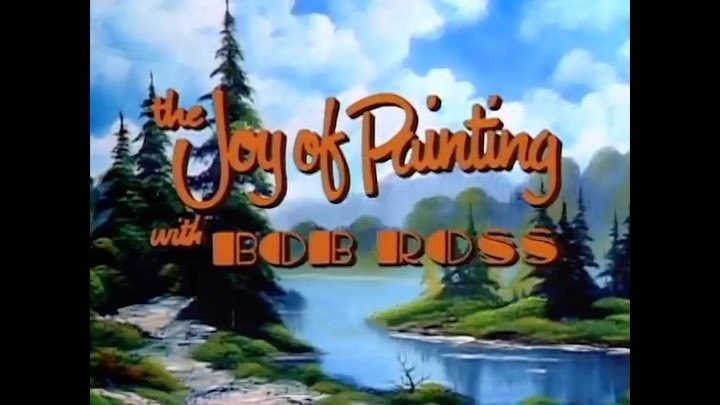
|
|
__________________
Quote:
Last edited by Old School; 09-02-2021 at 07:18 AM. |
|

|

|
|
08-31-2021, 03:14 AM
|
#2 |
|
Member
Senior Member
Join Date: Apr 28, 2020
Location: Earth
Posts: 2,137
|
Bob Ross: The Happy Painter Documentary
Video Description: Bob Ross: The Happy Painter (Full Documentary). You’ve seen him before...he's the quiet soft-spoken guy with the fuzzy afro hair painting mountains and trees with big brushes in a matter of seconds. Bob Ross is public television's most beloved personality and here is the behind-the-story look at his journey to becoming America's pop-culture icon. This docu-story reveals the personal life of Bob Ross through the loving accounts of close friends and family, childhood photographs, rare archive footage - what you know: his unwavering dedication to wildlife for example, and what you don't know: Bob Ross' straight hair, his fascination with fast cars, and so much more. You'll see rare film clips of Bob Ross with mentor William Alexander, and the very first rough-cut Joy of Painting episode. And you'll learn how one little TV commercial to advertise local painting classes slowly turned this gentle-mannered fellow from simple beginnings into a viral phenomenon that continues to allow millions around the world to realize their dream of becoming an artist. Enjoy fascinating interviews and insights from some famous Bob Ross enthusiasts too, such as talk show pioneer Phil Donahue, film stars Jane Seymour and Terrence Howard, Chef Duff Goldman, and country music favorites Brad Paisley and Jerrod Niemann. Bob Ross: The Happy Painter is presented in three parts: The Man, The Television Artist, and His Legacy. 
|
|
Last edited by Old School; 08-31-2021 at 09:46 AM. |
|
|
|
|
|
08-31-2021, 03:22 AM
|
#3 |
|
Member
Senior Member
Join Date: Apr 28, 2020
Location: Earth
Posts: 2,137
|
Bob Ross: Happy Accidents, Betrayal & Greed (2021 Netflix Documentary)
Netflix (Documentary Info) https://www.netflix.com/ca/title/81155081
New Yorker https://www.newyorker.com/culture/cu...ayal-and-greed  What’s Revealed in “Bob Ross: Happy Accidents, Betrayal & Greed” A new Netflix documentary explores the fraught legacy of Bob Ross and his happy little trees. t some point in my childhood, I believed that Bob Ross was the greatest painter who had ever lived. And for good reason. You couldn’t watch Leonardo da Vinci paint the “Mona Lisa” on television, but you could watch this peculiar man with an Afro paint a shimmering lake framed by snowcapped mountains and “happy little trees” in less than thirty minutes. Toward the end of many episodes of his PBS series, “The Joy of Painting,” Ross would take a palette knife and slash a tree trunk into the foreground—a potentially ruinous move that he would call a “bravery test”—only to create a newborn birch that snapped the whole postcard panorama to life. Voilà! Of course, the main draw, whether you were painting along at home or not, was Ross himself: that alfalfa-sprout helmet of hair, that gentle sea breeze of a voice, that Buddha-like calm. “We don’t make mistakes—we have happy accidents,” he’d say, nudging us toward our better selves. Like Mr. Rogers, another low-key pastor in the church of public television, Ross came off as wise, warm, and a little too pure for this world. He died in 1995, of lymphoma, but his afterlife has been busy: immortalized in the lo-fi-eighties limbo of our collective memory, he’s become an Internet meme, a satirical touchstone (“Family Guy,” “Deadpool”), and a whispery god of A.S.M.R. In 2015, the entirety of “The Joy of Painting” streamed on Twitch, a year after FiveThirtyEight analyzed each of the series’ episodes and calculated, among other facts that just feel good to know, that fifty-six per cent of Ross’s televised paintings feature a deciduous tree. Admirers of Ross’s saintly image may feel alarmed by the title of a new Netflix documentary premièring today: “Bob Ross: Happy Accidents, Betrayal & Greed.” The trailer, with its noirish overtones, doesn’t help matters, nor does the fact that the director, Joshua Rofé, made a previous docuseries about Lorena Bobbitt. Jesus Christ, what did Bob Ross do?, you may wonder. Can’t we have any good men? Indeed, the documentary has all the true-crime hallmarks: sinister underscoring, cryptic foreshadowing (“I’ve been wanting to get this story out for all these years,” the painter’s son, Steve Ross, says), traumatized-looking talking heads. But don’t worry: Bob Ross didn’t kill a man in Reno in 1966 or run a dog-fighting ring. If anything, the documentary is too accepting of his image as a celebrity faith healer. The trouble, it turns out, has to do with the posthumous handling of Ross’s brand, which became the subject of an extended legal morass after his death. According to Steve Ross, his father’s name and image have been exploited, against the painter’s dying wishes, by a couple named Annette and Walt Kowalski, who, as Ross’s business partners, helped launch him to fame, in the early eighties, and then took control of Bob Ross Inc. (BRI), after he died. The documentary paints the Kowalskis as ruthless, parasitic, highly litigious, and, God forbid, chintzy: on the official Bob Ross Web site, you can buy Bob Ross bookmarks, Bob Ross coffee mugs, Bob Ross Christmas ornaments, Bob Ross waffle makers, and a Bob Ross Monopoly board. “They care about control,” Steve says in the film. “They want to own the whole dang kit and caboodle.” The Kowalskis didn’t participate in the documentary, except in the form of a statement denying that their relationship with Bob Ross was “fractured at any point,” or that Annette and Bob, as Steve claims, had an affair. BRI, which is now run by their daughter, Joan Kowalski, recently sent Vanity Fair a handwritten memo from 1993, in which Ross asks Walt Kowalski for his comments on plans for a live show in Branson, Missouri, including a merchandising proposal that mentions branded toothbrushes, relaxation tapes, and soap-on-a-rope. In a Times video from 2019, Joan Kowalski says, cheerily, “The idea of socks and toasters and waffle makers, he would have loooved.” Maybe? As a legal matter, the ownership of the Bob Ross franchise has been settled since 2019, when Steve’s company lost a lawsuit against BRI and lacked the funds to appeal. In the documentary, Steve claims that, when his father was on his deathbed, the Kowalskis pressured him to sign over his name and likeness, but he refused. Shortly before dying, in what may have been a defensive tactic, Ross married his third wife, a nurse named Lynda, whom he had known for just a few months. Steve recalls overhearing his ill father, all of eighty-five pounds, screaming into the phone—and this guy wasn’t a screamer—“You’re not getting my name!” A year later, BRI sued Lynda and Ross’s half-brother, Jimmie Cox, for paintings and other physical objects, such as the palette that Ross used on television. According to documents shown in the documentary, Ross left the majority interest of his trust to Cox, who then turned it over to the Kowalskis in 1997. (A representative for Bob Ross Inc.—which has, unsurprisingly, issued a lengthy statement contesting many aspects of the documentary—disputed Steve’s claims. Cox declined to appear in the documentary, “citing fear of being sued.”) |
|
Last edited by Old School; 08-31-2021 at 09:49 AM. |
|
|
|
|
|
08-31-2021, 03:31 AM
|
#4 |
|
Member
Senior Member
Join Date: Apr 28, 2020
Location: Earth
Posts: 2,137
|
Ever Wonder What Happened To All of Bob Ross’s ‘Happy Little Paintings’?
ArtNet (Aug 2019) https://news.artnet.com/art-world/bo...sonian-1634419
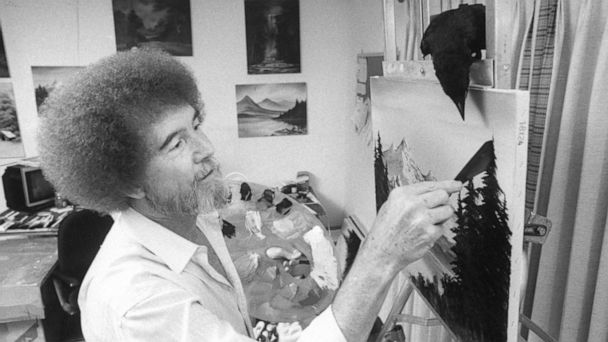 More Than 1,100 of Them Are Holed Up in a Virginia Warehouse. But now a handful of them have been acquired by the Smithsonian National Museum of American History. Bob Ross painted three versions of every artwork that appeared on the Joy of Painting: one prior to the episode, for a visual reference; one during the taping itself; and one afterword, for instructional booklets. There were over 400 episodes of the show, only a few of which didn’t feature a new Ross painting. (Ooccasionally he would host a guest who would paint a picture). Conservatively, that means there are at least 1,100 original Ross paintings floating around in the world. Recently, a group of New York Times https://www.nytimes.com/2019/07/12/a...s-mystery.html reporters set out to locate the works. They ended up at a huge warehouse in Herndon, Virginia, which is the headquarters of Bob Ross, Inc., a humble outfit that owns and stores the artist’s paintings, sells memorabilia, and fields countless requests from people who want to, say, put Ross’s face on mints or socks or even a waffle maker. The paintings are not for sale. n a short video report produced by the Times, Joan Kowalski, the president of Bob Ross, Inc., explained that while the company does indeed store Ross’s many works—around 1,165 of them—they lack the resources to do so properly. The video shows the paintings stacked in everyday cardboard boxes, piled together in a bland office space without much of a filing system. “They’re not ‘climate-controlled,’” Kowalski explains with air quotes, adding that it’s not “white glove service.” Fortunately, some of them are about to get some special attention. After receiving numerous letters from ardent Ross fans, the Smithsonian National Museum of American History in Washington recently acquired a handful of Ross’s paintings for its permanent collection. The institution also added a stepladder used by the artist on the Joy of Painting and two handwritten notebooks he kept for the second and third seasons of the show. “The hardest part was choosing the paintings,” Eric Jentsch, a sports and entertainment curator for the museum told the Times. He and fellow curator Ryan Lintelman made a pilgrimage to Bob Ross Inc. to select works that they felt exemplified his style and achievements, including polarized mountainscape from 1988 (On A Clear Day) and a moody waterfall picture from 1994 (Blue Ridge Falls). As of now, the museum has no plans to display the paintings. |
|
|
|
|
08-31-2021, 03:48 AM
|
#5 |
|
Member
Senior Member
Join Date: Apr 28, 2020
Location: Earth
Posts: 2,137
|
Largest Private Collection Of Bob Ross Painting In Penticton, BC, Canada
CBC https://www.cbc.ca/arts/it-s-the-wor...-b-c-1.5659949
 It's the world's biggest museum exhibition of Bob Ross paintings. So how'd it wind up in B.C.? Few have seen these happy little landscapes in person, and they're in Penticton all summer When a shipment of paintings from Bob Ross, Inc. arrived at the Penticton Art Gallery, Paul Crawford realized he was looking at mountains and meadows and "happy little trees" that few, if any, had seen in decades. "It was crazy opening them up," says Crawford, the curator at the PAG. "I don't think they'd seen the light of day since they were put in the boxes. They still smelled of turpentine." To September 13, Penticton — a city of 33,000 in the Okanagan Valley — will be one of the only places in the world where you can find an authentic Bob Ross. And the solo exhibition, Happy Little Accidents, is the largest of its kind to happen anywhere to date. Still, with more than 30 Bob Ross originals on view, the selection is nothing — a mere drop in the babbling brook — when you consider the volume Ross produced on The Joy of Painting alone. Let's Get Crazy Between 1983-94, the series taped 403 episodes out of a local PBS station in Muncie, Ind. And beyond the occasional guest appearance — from Bob's son Steve or Peapod the Squirrel — the program's lulling, low-budget formula never really wavered. In half an hour, Ross would conjure an original painting, pictures he actually created in triplicate for each episode. One painting was a reference image; another was for publication (instructional books were a pillar of the original Bob Ross empire, a business that was reportedly worth $15 million US by 1991). And the third piece materialized as the cameras rolled. It's those canvases — familiar landscapes of nowhere in particular — that countless viewers have admired from home. But beyond the screen, these original works have rarely, if ever, been on view. Though Ross was known to occasionally donate his work to PBS stations, he didn't sell the paintings made on the program, and Bob Ross, Inc. — the company that manages his intellectual property — has never been in the business of dealing art. Originals are not for sale through BRI. Instead, you can buy Bob Ross jigsaw puzzles, novelty socks, even Fun Dip-style powdered candy (the Bob Ross "Flavor Palette"). On rare occasions, an authentic landscape will appear on the market. (This gallery, based in Minneapolis, has made a passion project of acquiring them.)  Bob Ross Wilderness Way (1994) The Joy of Painting: Season 31/Episode 13 If you want to see an actual painting, traditionally there's only been one reliable option. A collection can be found in New Smyrna Beach, Fla., home to the Bob Ross Art Workshop and Gallery since 1992. But the motherlode's stored at BRI headquarters. Last year, the New York Times journeyed to their office in Herndon, Va., and made a charming, bite-sized documentary that solved the mystery of the missing landscapes. (Some 1,165 Bob Ross originals are stashed away in their building.) Crawford saw that doc last summer. And then he sent BRI an email. He wanted those paintings in Penticton. Making Happy Little Accidents "I was really wanting to celebrate the legacy of Bob Ross, and really look at some of the larger questions that Bob presented himself: whose work deserves to be in a museum, and whose work needs to be remembered?" says Crawford. A few years back, an exhibition devoted to the landscapes of Levine Flexhaug — Saskatchewan's master of the thrift-store sublime — appeared at galleries around the country. (A companion exhibition about Canadian "speed painters," Flexhaug included, is open at the PAG to Sept. 13.) Crawford says he's taken a note from that travelling Flexhaug show in curating Happy Little Accidents, and if there's a strict definition of "museum-worthy," the show aims to "beat the devil out of it," like some old dirty paintbrush. Ross died of lymphoma in 1995, but if a museum retrospective eluded him in his time, he wasn't especially fussed about it. In 1991, the New York Times asked Ross about the subject. Already a low-key icon, he said he wasn't keen on the notion. "Most painters want recognition, especially by their peers. I achieved that a long time ago with TV. I don't need any more." And according to BRI, major arts institutions weren't exactly clamouring to get their white gloves on a Bob Ross painting — at least until last year.  Bob Ross Mountain Summit (1987) The Joy of Painting: Season 13/Episode 10 The DePaul Art Museum in Chicago was the first gallery to make contact, says BRI; in April 2019, four paintings appeared there in the exhibition New Age, New Age: Strategies for Survival. Later that year, the Franklin Park Arts Centre (Purcellville, Va.) opened Happy Accidents, a show devoted to Ross's TV paintings. When the PAG came calling, BRI says they were fielding similar requests from galleries around the world. Three paintings are now on view at ArkDes in Sweden (they're part of a salute to ASMR, the oddly satisfying genre of which Ross is hailed as the permed patron saint). Another solo exhibition is scheduled to open at the Museum MORE in the Netherlands this November. And a brand new attraction, a shrine to the man himself, will open this October in Muncie, Ind., long-time home of The Joy of Painting. Writes Sarah Strohl, an executive assistant at BRI: "With the recent resurgence of interest and love for Bob Ross in the past few years, we have displayed paintings in exhibits as well as donated four paintings to the Smithsonian." (Oh, yeah — that happened in 2019, too. In addition to the artwork, Smithsonian National Museum of American History acquired an old easel from the show and some production notebooks.) "However," says Strohl, "our focus has always been the same as Bob's on the show: to interest others in creating paintings of their own." On the surface, yes, The Joy of Painting is designed so folks can dabble along from home. But it's a rare fan who's squeezed out a tube of Prussian Blue. Ross knew it. As he told the Orlando Sentinel in 1990: "The majority of our audience does not paint, has no desire to paint, will never paint." Instead, the show's appeal is more abstract. It's less about the art lesson, and more about the mood: cozy, nurturing — an audio-visual pat on the back, coaxing the audience to try something new. For 22 minutes, at least, there's no fear of failure. As Ross used to say, "We don't make mistakes, we just have happy accidents."  But a Bob Ross fan doesn't necessarily get the same huggy vibes when they think about contemporary art. In curating Happy Little Accidents, Crawford says he was thinking about Ross's gift for reaching the masses. "So many people feel they don't have the knowledge that they can engage in art, and that, to me, is appalling. We need to change that." Even in a pandemic, Happy Little Accidents has likely attracted some first-time patrons to the PAG already. The gallery is keeping extended hours to match demand, and is open seven days a week through the summer. According to Crawford, people have been lining up every morning since the show opened July 4. (Because of COVID-19, only 13 guests are allowed in the exhibition at a time.) Additional programming includes painting classes with a "Bob Ross-Certified" teacher. The first round sold out, and more have been added. (There are thousands of these official instructors around the world, it turns out. Says Crawford: "There must be a dozen that are living within a three-hour drive of us here in Penticton.")  Installation view of Happy Little Accidents at the Penticton Art Gallery. Visitors can watch old episodes of The Joy of Painting from this retro living room. The paintings selected for the show represent every season of The Joy of Painting's 11-year run, right up to Ross's final piece for the program. ("It's a very solemn painting with a sort of dead tree that sort of sits in a very ethereal sort of landscape," says Crawford.) In person, he says the landscapes are more impressive than he'd imagined. "There's a luminosity to them, you know, for as beguilingly simple as they are." And in researching the exhibition, Crawford says he came across a surprising B.C. connection — one that's only touched on at the museum. Before Ross made his TV debut, he studied with William Alexander, another guy known for painting landscapes on PBS. A former German POW, Alexander moved to North America after the Second World War, and lived all over Canada during his lifetime, including Powell River, B.C. His Emmy-winning series, though, The Magic of Oil Painting, taped at a Los Angeles public-broadcasting station from 1974-82, and it shares plenty of aesthetic DNA with Ross's format, right down to the all-black set. "It's remarkable how similar they are," says Crawford. "But he was a rough, gruff-spoken fellow and didn't quite have Bob's smooth way of delivery." Alexander wasn't cool with Ross's fame, though. (As he told the New York Times in 1991: "I trained him and he is copying me.") Despite the bad blood, his influence is briefly mentioned in the PAG show.  Bob Ross Surf's Up (1986) The Joy of Painting: Season 9/Episode 2 Ross's paintings, though, are the focus of the exhibition — a blur of familiar lakes and clouds and trees. At face value, they're arguably not "museum-worthy," but to Crawford, they're worth bringing all the way to B.C., especially as Ross's legacy has grown in recent years. "I guess it's the whole question of what belongs in art history," he says. "To me, art history is really social history." And since the '80s, Ross hasn't left the public consciousness. At any time, you can see his paintings on screen, the place they were originally intended to be seen. (Find The Joy of Painting on on Twitch and Tubi and YouTube.) "To people out there in the real world," says Crawford, "certainly his name is better known than any of the most famous of Canadian painters." Bob Ross Mountain Serenity (1993) The Joy of Painting: Season 28/Episode 12  Bob Ross Pretty Autumn Day (1992) The Joy of Painting: Season 24/Episode 5 |
|
|
|
|
08-31-2021, 04:00 AM
|
#6 |
|
Member
Senior Member
Join Date: Apr 28, 2020
Location: Earth
Posts: 2,137
|
The Reason Why Bob Ross Didn't Sell His Paintings...
Medium https://medium.com/the-artists-minds...s-d3126a9a41a0
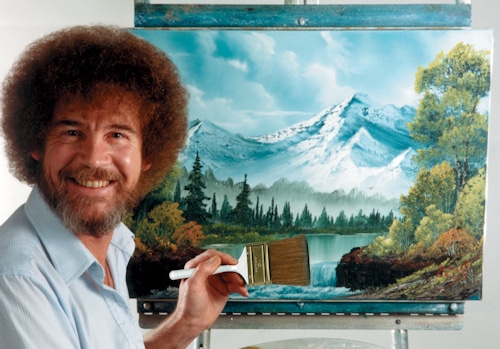 There’s A Reason Bob Ross Didn’t Sell His Paintings. They weren’t meant to be framed. They were demos.  Bob Ross, oil on canvas, Alaskan landscape, from the collection of James L. Carter I hadn’t thought about Bob Ross in decades until the year 2016. That year three students showed up dressed like him for Halloween. I’d come as Andy Warhol, but everyone thought I was Sia. “Campbell’s soup?” I said, holding up the can I carried as an accessory, hoping to jog memories — they’d learned about him during our lesson on Pop Art. “Fifteen minutes of fame? Marilyn Monroe?” Meanwhile my art students were celebrating the kid in the chambray shirt with a curly wig and a paint palette, practically lifting the kid up on their shoulders. The Happy Little Accident guy? I thought. Really? Him? It’s amazing what 20 years and the Internet will do. What goes around can come back to bite you with a vengeance. There I was — happy my kids were excited about an artist. I was just worried it was the wrong one. As an art student back in the 90’s Bob Ross was a bit of a joke. He had a squirrel in his pocket, seemed a little too goofy to be taken seriously (that hair for goodness sakes!) and as proof that he wasn’t a real artist: his artwork wasn’t for sale or shown in any gallery.  Bobette The Squirrel From The Joy Of Painting: Season 4/Episode 13, Absolutely Autumn But what the me decades ago missed about Bob Ross is this: he was a teacher showing off his teaching, not an artist showing off his art. Art teachers do demonstrations (known as demos) all the time for every class, and Bob Ross did three for each show that aired — one beforehand, one during the actual show and one afterwards. No wonder he chose not to sell these “on air paintings.” They were process pieces meant only for the on-air show. This is very much like what I do for each project I teach to my students. I do one completed piece beforehand as a sample and to problem-solve timing and the outcome. Then I do another, which I leave partially completed, so students can see how things are bound to look like a mess just before they come together. Then there’s the project I complete along with the students while the class happens live. These demos aren’t my best work. I’m busy talking, and I get distracted and forget a step here or there, and sometimes I make big mistakes (or happy accidents as Bob called them). I don’t mind these errors; it helps the students to see me as fallible and capable of working through mistakes. If anyone tried to argue about whether my demos were art or judge me as an artist based on them, I’d have to laugh. These demos are just simplified versions of what I expect from my students. Here’s why it’s clear that Bob Ross’s paintings were demos and not meant to be viewed as fine art: He painted from his imagination, not real life. Bob Ross encouraged everyone to just plop in a river there, a tree here as if we’d all been privy to the Alaska he remembered. This was in direct opposition to everything I was taught in art school — to observe from life — never paint out of your head. So, while it’s best for a fine artist to observe from life, a teacher can’t always do that in a classroom setting. I’m not going to be able to offer my young students a view of snow-capped Mt. Whitney or present them with vases full of real sunflowers class after class, but that doesn’t mean I can’t teach them the components and basics of painting or drawing these things. Sometimes it’s okay to have students draw or paint from their imaginations, as long as you are teaching them the elements and principles of art along the way. In painting after painting, everything looks the same. Those Bob Ross pine trees will look like the same Bob Ross pine trees in every single painting. This is the Bob Ross Method, people! It’s tried and true! Meanwhile Michelangelo only did one Statue of David, da Vinci just one Mona Lisa. Artists need to keep their voices fresh and bring new perspectives to their work. Yet what that doesn’t account for is that Bob Ross is teaching people how to practice, practice, practice by doing study after study after study. It’s formulaic by design. That’s what I was missing back in the day when judging Bob Ross as an artist. These are demos. Demos aren’t meant to be fine art; they are studies. Bob was doing that pine tree again because he never knew if it was the same viewer tuning in again or someone new. He’s going to show you how to paint that pine tree in this setting and in that setting and in every setting, because, he has to keep it fresh for returning and new viewers alike. He used a bunch of gimmicky tricks. A fine artist doesn’t give up tricks of the trade for free — because, hello! Then everyone would be copying them! Art teachers on the other hand want their students to succeed, thus Bob Ross, like any teacher worth his salt pulled the curtain back to reveal the wizardry — a little palette knife here, a fan brush there, mix these three colors to get that outcome. There wasn’t any deeper meaning to his work. Landscapes can be meaningful when they speak to the human perspective, point of view and understanding and appreciation of the environment — but a teacher doing a demo is merely demonstrating technique. While I want my students to go for meaning, whether moral, spiritual, or cultural, that’s not what I’m projecting as I teach. I’m merely laying the groundwork. I expect them to find their own significance and meaning after they’ve mastered technique. He didn’t sell the works he produced on air but sometimes he donated them or gave them away. An artist’s demos or studies aren’t always an artist’s best work. They’re meant to be rough drafts. We churn them out and then cast them off. I don’t mind giving away my demos to students here and there if they want them, but I never lay claim to them as art with a capital A, and only sign them if a student takes it (and not because I’m necessarily proud of it, only so people will know it was mine and not the student’s). He painted his paintings lickety-split It takes me at least five hours to paint anything good, but I can crank out a demo lickety-split. I have to in order to fit the demonstration into the class period, just like Bob Ross — who only had a half an hour show. Apparently he sometimes taped five shows in one day! His goal wasn’t to produce a masterpiece but to give the viewer an attainable goal that could happen in just one sitting. There’s a reason Bob Ross’s paintings aren’t on the market for sale and instead are packed in boxes at Bob Ross, Inc — and I’m sure that’s exactly how he wanted it. His demos were amazingly accomplished for how quickly he painted them, and I get why those who love him would want to own one, but I doubt he’d argue they were masterworks bound for a museum or gallery. As a teacher he knew their value was in the moment, for the viewer watching from home. The artist in me twenty years ago thought Bob Ross was a hack, but the teacher in me begs to differ. I’m happy that he’s back in the limelight and being lauded as an inspiration to generations — teachers so often don’t get the credit they’re due. Bob Ross was a creative, fun, and inspiring art instructor and that’s the best way to appreciate and remember him. |
|
|
|
|
|
|