Sitcoms Online - Main Page / Message Boards - Main Page / News Blog / Photo Galleries / DVD Reviews / Buy TV Shows on DVD and Blu-ray

View Today's Active Threads (No Chit Chat/Chit Chat Only) / View New Posts (No Chit Chat/Chit Chat Only) / Mark All Boards Read / Chit Chat Board

Our Miss Brooks links and theme songs at Sitcoms Online / Our Miss Brooks Photo Gallery


Our Brooks - Season 1 - Volume 1

Buy Our Brooks - Season 1 - Volume 1 on DVD
Our Brooks - Season 1 - Volume 2

Buy Our Brooks - Season 1 - Volume 2 on DVD

Sitcoms Online Message Boards - Forums  

Go Back   Sitcoms Online Message Boards - Forums > 1950s Sitcoms > Our Miss Brooks
Register Community View Today's Active Threads (No CC/CC Only) Search Photo Galleries Calendar FAQ

Notices

SitcomsOnline.com News Blog Headlines Facebook X/Twitter Bluesky Threads Instagram YouTube RSS

Additional Fox Summer 2026 Dates; BET's Lot Patrol Premiere Date
Kids Make Me Angry Sneak Peek; Shrinking Adds Karen Gillan for Season 4
Netflix's A Different World Premieres September 24; Ted Danson Joins Elizabeth Banks Apple TV Comedy
Sitcom Stars on Talk Shows; This Week in Sitcoms (Week of June 1, 2026)
SitcomsOnline Digest: New Episodes of The Simpsons Headed Exclusively to Disney+; Release Date Set for Reboot of A Different World
Disney+ Announces Brand New The Simpsons Episodes; Remembering the Sitcom Stars and Crew Members We Recently Lost
CBC 2026-27 Programming Slate Includes New Original Comedies; Jay Shetty Podcast Heads to Netflix


New on DVD and Blu-ray

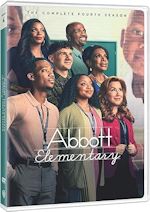
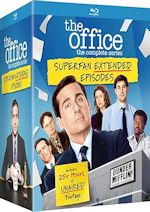
Happy's Place - Season One (Blu-ray) Two and a Half Men - The Complete Series (Blu-ray) Abbott Elementary - The Complete Fourth Season (DVD) I Love Lucy - The Complete Series - 75th Anniversary Edition (DVD) The Office - The Complete Series - Superfan Extended Episodes (Blu-ray)

11/04/25 - Happy's Place - Season One (Blu-ray) (DVD)
11/11/25 - Rick and Morty - Season 8 (Blu-ray) (DVD)
11/11/25 - SpongeBob SquarePants - The Complete Fifteenth Season (DVD)
11/11/25 - Two and a Half Men - The Complete Series (Blu-ray)
12/02/25 - Tom and Jerry - The Golden Era Anthology (1940-1958) (Blu-ray) (DVD)
12/16/25 - Lippy the Lion and Hardy Har Har - The Complete Series (Blu-ray)
12/16/25 - Wally Gator - The Complete Series (Blu-ray)
01/20/26 - The Woody Woodpecker and Friends Golden Age Collection (Blu-ray)
01/27/26 - The New Fred and Barney Show - The Complete Series (Blu-ray)
02/11/26 - Tom and Jerry - The Complete CinemaScope Collection (Blu-ray)
03/24/26 - Looney Tunes Collector's Vault - Volume 2 (Blu-ray)
04/11/26 - Abbott Elementary - The Complete Fourth Season (DVD)
04/21/26 - Famous Studios Champion Collection (Blu-ray) (DVD)
05/19/26 - I Love Lucy - The Complete Series - 75th Anniversary Edition (DVD)
05/19/26 - Looney Tunes Cartoons - The Complete Series (Blu-ray) (DVD)
07/14/26 - The Office - The Complete Series - Superfan Extended Episodes (Blu-ray)
07/28/26 - I Love Lucy - The Complete Series - 75th Anniversary Edition (Blu-ray)

More Recent and Upcoming TV DVD and Blu-ray Releases / TV Shows on DVD, Blu-ray and Prime Video / DVD Reviews Archive


Search Sitcoms Online:


Donate

Please make a donation if you can help with Sitcoms Online's web hosting costs. Thanks for your support!

We receive a small commission on all DVDs, Blu-rays, CDs, Books, and any other items ordered through our Amazon.com links as an associate. Thanks for using our links for your online shopping!

Reply
 
Thread Tools Search this Thread
Old 11-26-2019, 12:30 AM   #16
jimmo
Member
Occasional Poster
 
Join Date: Apr 20, 2006
Location: Boston, Mass. area
Posts: 25
TV Color-filmed and colorized classic TV episodes

Quote:
Originally Posted by Sal View Post
Here's proof that you can find almost anything on the Internet including episodes and clips of classic TV series that were thought to be lost or missing. A good example is "Our Miss Brooks" where, until recently, only a handful of public domain episodes were available online. Last year, I found a collection of over 60 additional episodes from a YouTube user. Today I found 5 more episodes on the Internet Archive --- and they are all in color!!

I'm not exactly sure how they ended up in color unless CBS used it and other series in the 1950s to experiment with color TV broadcasts which didn't become standard viewing until 1965. So what you are going to see is truly a piece of history. Enjoy it and prepare to be amazed!

Our Miss Brooks - Color - 5 episodes


Unfortunately, I think most of these so-called colorizations of vintage television series' you found on the Internet Archive (and many more of which are also available on YouTube) are probably from the same source, and certainly not from CBS-Paramount nor up to the better standards of modern day colorization, such as are produced by CBS-Paramount when airing special episodes of I Love Lucy, The Dick Van Dyke Show, The Andy Griffith Show, etc., during the A.E. Nielsen Company's so-called "sweeps" periods, especially at Christmastime.

These colorized renderings of vintage TV sitcoms on YouTube and Internet Archive may remind one more of the early colorizations of films done by cable TV maven and Cable News Network (CNN) and TBS/Superstation founder Ted Turner shortly after he purchased the old M-G-M film library in the early 1980s, before his company was merged with AOL-Time-Warner. But, thankfully, professional colorization technology has come at least a little way since then. There has even been an improvement between the colorizations of the I Love Lucy Christmas episode (Season Six, Episode 11), first done in 1990 with only the framing sequences, and another one done later (in 2013) of the entire episode, referencing actual photographs from the Desilu sets.

Besides CBS' Our Miss Brooks, I have also found some bleached-out, pastel "colorizations' of some other CBS sitcoms, among them December Bride and its spin-off, Pete and Gladys, as well as The Bob Cummings Show (a.k.a. Love That Bob), Private Secretary and The Tim Conway Show (even though, originally airing in 1970, it was filmed in color), all on YouTube. And after watching some of these faux colorizations, I think I almost prefer the poor quality, public domain black and white originals, which at least don't exacerbate the poor contrast any more so.

Other colorizations include ABC's Date with the Angels and The Farmer's Daughter, CBS' Hennesey and Topper, NBC's Karen (spun off earlier that same season from the sitcom trilogy 90 Bristol Court that included Harris Against the World starring Jack Klugman and Tom, Dick and Mary with Steve Franken of The Many Loves of Dobie Gillis fame and The Tab Hunter Show, and even the first-run syndicated The Great Gildersleeve starring Willard Waterman (the second radio "Gildy" after original Harold Peary) and the pilot for The Dick Van Dyke Show titled Head of the Family, starring creator and writer Carl Reiner, among several other colorized sitcom episodes.

You may view a playlist of these colorizations of older TV sitcoms here: https://www.youtube.com/playlist?lis...UJ2s8osi-6PHxs

And if you go to this other link you may see a fuller menu of more colorizations, of films and more TV episodes, including some TV dramatic series': https://www.youtube.com/user/danilbruce/playlists

All that said, I have read that CBS had experimented with actually filming some color episodes (different from colorizing, which is merely computer-coloring after the fact of filming) in the 1954-55 season, to see how at least some of their series' would appear if broadcast in color. Three CBS series' which definitely filmed color episodes were Lassie, two pilot episodes filmed--"Inheritance" (Season 1, Episode #1) and "The Well" (Season 1, Ep. #24), although only one, "The Well," filmed in color (at least so far as we know at this point), The George Burns and Gracie Allen Show and The Jack Benny Program. The color episodes' descriptions, with original airdates, are as follows (from IMDB.com and TV.com)--

Lassie - Season 1, Episodes 24 "The Well" (Original CBS airdate February 20, 1955): A snoopy inspector from the water department insists on seeing the Miller well. [Incidentally, one of the guest stars in this episode
was Hugh Beaumont, who in a few years' time woudl become best-known as "Ward Cleaver'' in Leave it to Beaver, which also made its debut the first of its six seasons on CBS.

The George Burns and Gracie Allen Show - Season 5, Episode 1 "George Invites Critics to Watch First Show of Season" (Original CBS airdate October 4, 1954): George invites two newspaper reporters, while Gracie secretly invites two dozen strangers over to the house to view their opening night show.

The Jack Benny Program - Season 5, Episode 4 "Jack Takes Beavers to the Fair" (Original CBS airdate March 6, 1955): In this color episode, Jack takes a group of boys called the Beverly Hills Beavers (one of them is young Harry Shearer) to the fair. Things get off to a bad start; he has to be shot down when he holds too many helium balloons, he falls off the merry-go-round, and he succeeds in ringing the bell at the top of the strength meter only after one of the Beavers sticks a pin in his backside. Several times they run into Mr. Kitzel, who's a "utility player" working wherever he's needed. At one point, Jack steps into a lion cage, thinking the animal is Mr. Kitzel in a costume; it isn't. As Benny and the boys leave, they pass a hula girl show — and the girl is Mr. Kitzel!

I had previously read in the book TV on Video, by the late Sam Frank, that no master copy of this Benny program could be located, though. I also know of no finding yet, in color, for the first ("Inheritance") of the two Lassie episodes which served as pilots for that long-running (17 years on CBS, two years in first-run syndication) family adventure series. But I have "The Well" episode in color, from its inclusion in a special three episodes' DVD set of Lassie titled Lassie: A Mother's Love, released by Classic Media in 2006, which you may view or download from the following link, the color episode (and some comparison scenes of the monochrome and color versions) the very last episode of this three episodes' upload--https://www.youtube.com/watch?v=TiA3eL0ctG0

And The George Burns and Gracie Allen Show color episode is uploaded to YouTube in two versions, one shorter in running time (even with a commercial), but appearing more vivid, while the other appears colorized or at least not as vivid, but brighter. You may draw your own conclusions by viewing both versions of that Burns & Allen color episode from the following links--https://www.youtube.com/watch?v=90EHgPZiP90&t=1053s

AND

https://www.youtube.com/watch?v=e9U5oGqT0Ps


And even though NBC ultimately prevailed over rival TV network CBS in their competition for which analog color broadcasting system would be adopted by the Federal Communications Commission (FCC) and the National Television System Committee (NTSC) and become the standard used in North America until conversion to mostly digital broadcasting in 2012, at first it had been the CBS color system which was adopted. CBS had developed a field-sequential color system, a mechanically-based system that consisted of a rotating color wheel of red, blue, and green filters in front of a monochrome (black and white) camera, feeding a monochrome Cathode Ray Tube (CRT) receiver viewed through a second rotating color wheel. The two wheels were kept in phase synchronization, such that successive television fields were viewed using identical color primary filters to the one at the camera. To overcome flicker, the field rate was increased from 60 to 144 fields per second, resulting in 24 complete color frames per second. To compensate for the increased field rate within the standard 6-MHz channel, the lines per frame were reduced from 525 to 405. A 29,160-Hz line rate resulted. But this led to a basic incompatibility of the CBS color system, such that no standard monochrome receiver could display "an intelligible picture during color telecasts." In other words, viewers watching on black and white TV sets saw no picture or, if at all, a picture with distorted images.

Eventually, the CBS color TV plan was scrapped, ostensibly because of a federal government order that its development would require use of scarce resources then needed for the Korean conflict (Korean War), which rivals such as Alfred P. DuMont (of the then-fourth TV network, DuMont) claim was a face-saving plot by CBS, in any case resulting in the adoption by the FCC and NTSC of NBC's "compatible color system," an electronic-based color system which could be utilized without affecting the majority of viewers who would continue (for almost another two decades) to view TV on monochrome sets. But even though the NBC-RCA color system had been adopted in 1954, "The Peacock Network" still didn't film most of its episodic series' (Bonanza first in 1959 being the exception) in color until the early 1960s (Hazel, another one beginning in 1962-63), for the simple fact most viewers in the United States still didn't own color TV sets until the late 1960s and even into the early 1970s.

I hope at least some will find the above helpful and interesting. I tried to expand upon the original thread's theme of the colorized episode of Our Miss Brooks, utilizing what I already had in my head (and in my private video collection) along with more background from IMDB.com, TV.com and Wikipedia, plus some other sources, including the late Sam Frank's book (fraught as it was with more factual errors and typos than I'd ever seen in any reference book before or since), TV on Video. And doing the research for this forum contribution also actually provided me with additional sources of even more colorized TV episodes than those about which I had known previously.

Have fun reading and watching!

Last edited by jimmo; 11-26-2019 at 12:41 AM. Reason: Hyperlink not pointing correctly
jimmo is offline   Reply With Quote
Old 11-26-2019, 06:55 PM   #17
Sal
Member
Forum Veteran
 
Sal's Avatar
 
Join Date: Jul 20, 2001
Location: Oakville, Ont. Canada
Posts: 6,148
Default

Quote:
Originally Posted by jimmo View Post
Unfortunately, I think most of these so-called colorizations of vintage television series' you found on the Internet Archive (and many more of which are also available on YouTube) are probably from the same source, and certainly not from CBS-Paramount nor up to the better standards of modern day colorization, such as are produced by CBS-Paramount when airing special episodes of I Love Lucy, The Dick Van Dyke Show, The Andy Griffith Show, etc., during the A.E. Nielsen Company's so-called "sweeps" periods, especially at Christmastime.

These colorized renderings of vintage TV sitcoms on YouTube and Internet Archive may remind one more of the early colorizations of films done by cable TV maven and Cable News Network (CNN) and TBS/Superstation founder Ted Turner shortly after he purchased the old M-G-M film library in the early 1980s, before his company was merged with AOL-Time-Warner. But, thankfully, professional colorization technology has come at least a little way since then. There has even been an improvement between the colorizations of the I Love Lucy Christmas episode (Season Six, Episode 11), first done in 1990 with only the framing sequences, and another one done later (in 2013) of the entire episode, referencing actual photographs from the Desilu sets.

Besides CBS' Our Miss Brooks, I have also found some bleached-out, pastel "colorizations' of some other CBS sitcoms, among them December Bride and its spin-off, Pete and Gladys, as well as The Bob Cummings Show (a.k.a. Love That Bob), Private Secretary and The Tim Conway Show (even though, originally airing in 1970, it was filmed in color), all on YouTube. And after watching some of these faux colorizations, I think I almost prefer the poor quality, public domain black and white originals, which at least don't exacerbate the poor contrast any more so.

Other colorizations include ABC's Date with the Angels and The Farmer's Daughter, CBS' Hennesey and Topper, NBC's Karen (spun off earlier that same season from the sitcom trilogy 90 Bristol Court that included Harris Against the World starring Jack Klugman and Tom, Dick and Mary with Steve Franken of The Many Loves of Dobie Gillis fame and The Tab Hunter Show, and even the first-run syndicated The Great Gildersleeve starring Willard Waterman (the second radio "Gildy" after original Harold Peary) and the pilot for The Dick Van Dyke Show titled Head of the Family, starring creator and writer Carl Reiner, among several other colorized sitcom episodes.

You may view a playlist of these colorizations of older TV sitcoms here: https://www.youtube.com/playlist?lis...UJ2s8osi-6PHxs

And if you go to this other link you may see a fuller menu of more colorizations, of films and more TV episodes, including some TV dramatic series': https://www.youtube.com/user/danilbruce/playlists

All that said, I have read that CBS had experimented with actually filming some color episodes (different from colorizing, which is merely computer-coloring after the fact of filming) in the 1954-55 season, to see how at least some of their series' would appear if broadcast in color. Three CBS series' which definitely filmed color episodes were Lassie, two pilot episodes filmed--"Inheritance" (Season 1, Episode #1) and "The Well" (Season 1, Ep. #24), although only one, "The Well," filmed in color (at least so far as we know at this point), The George Burns and Gracie Allen Show and The Jack Benny Program. The color episodes' descriptions, with original airdates, are as follows (from IMDB.com and TV.com)--

Lassie - Season 1, Episodes 24 "The Well" (Original CBS airdate February 20, 1955): A snoopy inspector from the water department insists on seeing the Miller well. [Incidentally, one of the guest stars in this episode
was Hugh Beaumont, who in a few years' time woudl become best-known as "Ward Cleaver'' in Leave it to Beaver, which also made its debut the first of its six seasons on CBS.

The George Burns and Gracie Allen Show - Season 5, Episode 1 "George Invites Critics to Watch First Show of Season" (Original CBS airdate October 4, 1954): George invites two newspaper reporters, while Gracie secretly invites two dozen strangers over to the house to view their opening night show.

The Jack Benny Program - Season 5, Episode 4 "Jack Takes Beavers to the Fair" (Original CBS airdate March 6, 1955): In this color episode, Jack takes a group of boys called the Beverly Hills Beavers (one of them is young Harry Shearer) to the fair. Things get off to a bad start; he has to be shot down when he holds too many helium balloons, he falls off the merry-go-round, and he succeeds in ringing the bell at the top of the strength meter only after one of the Beavers sticks a pin in his backside. Several times they run into Mr. Kitzel, who's a "utility player" working wherever he's needed. At one point, Jack steps into a lion cage, thinking the animal is Mr. Kitzel in a costume; it isn't. As Benny and the boys leave, they pass a hula girl show — and the girl is Mr. Kitzel!

I had previously read in the book TV on Video, by the late Sam Frank, that no master copy of this Benny program could be located, though. I also know of no finding yet, in color, for the first ("Inheritance") of the two Lassie episodes which served as pilots for that long-running (17 years on CBS, two years in first-run syndication) family adventure series. But I have "The Well" episode in color, from its inclusion in a special three episodes' DVD set of Lassie titled Lassie: A Mother's Love, released by Classic Media in 2006, which you may view or download from the following link, the color episode (and some comparison scenes of the monochrome and color versions) the very last episode of this three episodes' upload--https://www.youtube.com/watch?v=TiA3eL0ctG0

And The George Burns and Gracie Allen Show color episode is uploaded to YouTube in two versions, one shorter in running time (even with a commercial), but appearing more vivid, while the other appears colorized or at least not as vivid, but brighter. You may draw your own conclusions by viewing both versions of that Burns & Allen color episode from the following links--https://www.youtube.com/watch?v=90EHgPZiP90&t=1053s

AND

https://www.youtube.com/watch?v=e9U5oGqT0Ps


And even though NBC ultimately prevailed over rival TV network CBS in their competition for which analog color broadcasting system would be adopted by the Federal Communications Commission (FCC) and the National Television System Committee (NTSC) and become the standard used in North America until conversion to mostly digital broadcasting in 2012, at first it had been the CBS color system which was adopted. CBS had developed a field-sequential color system, a mechanically-based system that consisted of a rotating color wheel of red, blue, and green filters in front of a monochrome (black and white) camera, feeding a monochrome Cathode Ray Tube (CRT) receiver viewed through a second rotating color wheel. The two wheels were kept in phase synchronization, such that successive television fields were viewed using identical color primary filters to the one at the camera. To overcome flicker, the field rate was increased from 60 to 144 fields per second, resulting in 24 complete color frames per second. To compensate for the increased field rate within the standard 6-MHz channel, the lines per frame were reduced from 525 to 405. A 29,160-Hz line rate resulted. But this led to a basic incompatibility of the CBS color system, such that no standard monochrome receiver could display "an intelligible picture during color telecasts." In other words, viewers watching on black and white TV sets saw no picture or, if at all, a picture with distorted images.

Eventually, the CBS color TV plan was scrapped, ostensibly because of a federal government order that its development would require use of scarce resources then needed for the Korean conflict (Korean War), which rivals such as Alfred P. DuMont (of the then-fourth TV network, DuMont) claim was a face-saving plot by CBS, in any case resulting in the adoption by the FCC and NTSC of NBC's "compatible color system," an electronic-based color system which could be utilized without affecting the majority of viewers who would continue (for almost another two decades) to view TV on monochrome sets. But even though the NBC-RCA color system had been adopted in 1954, "The Peacock Network" still didn't film most of its episodic series' (Bonanza first in 1959 being the exception) in color until the early 1960s (Hazel, another one beginning in 1962-63), for the simple fact most viewers in the United States still didn't own color TV sets until the late 1960s and even into the early 1970s.

I hope at least some will find the above helpful and interesting. I tried to expand upon the original thread's theme of the colorized episode of Our Miss Brooks, utilizing what I already had in my head (and in my private video collection) along with more background from IMDB.com, TV.com and Wikipedia, plus some other sources, including the late Sam Frank's book (fraught as it was with more factual errors and typos than I'd ever seen in any reference book before or since), TV on Video. And doing the research for this forum contribution also actually provided me with additional sources of even more colorized TV episodes than those about which I had known previously.

Have fun reading and watching!


This is great information and was very well said. I agree with you that most of the colorized work that was done by companies like CBS for their "I Love Lucy" specials and Columbia for the first seasons of "Bewitched" and "I Dream Of Jeannie" and, worst of all, Ted Turner colorizing old movies for TBS, are not well done and look like they were drawn by a child. But if you have the time and patience and the right technology to do this the right way, the results can be very good and pleasing to the eye, which I have seen in this website that I talked about on a previous page which is called "Pop Colorture". If you missed it before, it's worth another look:


Pop Colorture
__________________
LIVE TV - Updated By Request - April 2026


ANTENNA TV

ME TV

ME TV TOONS


Zerostream - LIVE TV Guide
Sal is online now   Reply With Quote
Old 11-27-2019, 08:58 AM   #18
upperco
Member
Forum Regular
 
Join Date: May 15, 2013
Posts: 720
Default

Quote:
Originally Posted by jimmo View Post
I have been trying to find the three other Christmas episodes of The Bob Cummings Show (syndication title Love That Bob) for a few years now. The Christmas episode of Love That Bob most commonly in circulation is "Grandpa's Christmas Visit, which is Episode 14 from Season 2 (December 22, 1955), which I already have. But I am seeking the following other Christmas episodes--Season 1, Episode 6 - "A Wife for Christmas" (February 6, 1955), Season 2, Episode 13 - "The Christmas Spirit" (December 15, 1955) and Season 4, Episode 13 - "Bob's Christmas Party" (December 24, 1957).

If anyone reading this has any of those Christmas episodes of The Bob Cummings Show/Love That Bob, I am open to a trade for some titles from my own video collection of films and TV episodes.

I am also trying to locate a second Christmas episode of Topper. The Christmas episode I already have of that series is Episode 12 from the first season, titled "A Christmas Carol" (December 25, 1953). I am seeking Season 2, Episode 24 - "Topper's Quiet Christmas" (December 24, 1954). Likewise, if anyone reading this has that second season Christmas episode of Topper, I am open to a trade for a title from my own video collection of films and TV episodes.

And while I have the lone Christmas episode of Bachelor Father, "Deck the Halls," which is the fourth episode of the series' fifth and final season, the file of it I have is very small, only of mobile quality (320 x 240), if even that. And also, unfortunately, after I tried to convert the file to make the image larger, it merely increased the already-thick black border surrounding the video image, leaving the resolution of the video image still too tiny to watch with much enjoyment. The other problem is that my copy of that episode is very bleached-out, the whiteness too bright and not enough contrast with the black.

If anyone reading this has a better copy of the "Deck the Halls" episode of Bachelor Father, I am open to a trade for something else from my vast video collection of films and TV episodes.

Really, it is a shame that none of these three TV series' (two of them very popular in their original prime time network runs) have ever been officially remastered and released on home video and/or for on demand streaming. And also, sadly, I really fear that with most of the Baby Boomers now facing mortality, the chances to see any more vintage TV series' released for home-viewing is next to nil from here on out.

I have two of the three LOVE THAT BOB episodes you want. PM with your list and hopefully we can work out a trade!
upperco is offline   Reply With Quote
Reply


Posting Rules
You may not post new threads
You may not post replies
You may not post attachments
You may not edit your posts

BB code is On
Smilies are On
[IMG] code is On
HTML code is Off

Forum Jump


All times are GMT -4. The time now is 12:44 PM.


Although the administrators and moderators of the Sitcoms Online Message Boards will attempt to keep all objectionable messages off this forum, it is impossible for us to review all messages. All messages express the views of the author, and neither the owners of the Sitcoms Online Message Boards, nor vBulletin Solutions Inc. (developers of vBulletin) will be held responsible for the content of any message. The owners of the Sitcoms Online Message Boards reserve the right to remove, edit, move or close any thread for any reason.

Powered by vBulletin® Version 3.8.11
Copyright ©2000 - 2026, vBulletin Solutions Inc.